
Bone grafting in Bacchus Marsh, when your implant needs a stronger foundation.
Being told there's "not enough bone" for an implant usually isn't the end of the conversation. It means the plan needs one more step. Bone grafting rebuilds the bone at the site so an implant has something solid to anchor into, and we only recommend it when your 3D imaging shows it's needed.
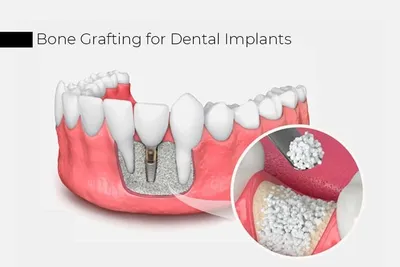
Grafting rebuilds bone where it has thinned
What is bone grafting for a dental implant?
Bone grafting adds graft material to a part of the jaw where the bone has thinned, rebuilding enough volume to hold a dental implant securely. At our Bacchus Marsh clinic it's only recommended when 3D imaging shows the site needs it, and many implants don't.
Once a tooth is lost, the bone that held its root has less work to do and can slowly shrink. The longer the gap, the more it may thin. That isn't harmful by itself, but it can leave too little bone to anchor an implant firmly. Gum disease is another way bone is lost: the AIHW describes periodontitis as damaging the soft tissue and bone supporting the teeth, and its report on the 2017–18 National Study of Adult Oral Health found it in 30.1% of adults aged 15 and over. Moderate or severe periodontitis rose from 12% of 15–34 year olds to 51% of 55–74 year olds.
How quickly the bone changes has been measured. A 2012 systematic review of 20 studies found that in the studies that re-opened the site to measure the bone directly, the ridge had lost 29–63% of its width and 11–22% of its height six months after the tooth was removed, and that the width had already narrowed by 32% at three months in the studies that reported it. Most of the change came in the first three to six months. Those are averages across many people, and individual sites vary widely, which is why we measure yours with 3D imaging rather than assume. Losing every tooth is less common than losing one, but it also rises with age: the AIHW's 2017–18 National Study of Adult Oral Health found complete tooth loss in 4.0% of adults aged 15 and over, in 8.1% of those aged 55–74 and in 21% of those aged 75 and over.
Grafting rebuilds that volume. The graft is usually given time to heal and join your own bone before the implant goes in, and sometimes both happen at the same appointment. Our article on the role of bone grafting in dental implants goes into more detail.
Three situations where grafting comes up.
Grafting isn't needed for every implant. What your 3D imaging shows is what decides. These are the three situations where it's discussed most.
A single tooth, missing for a while
- —The bone at that site may have thinned without a root to support.
- —3D imaging shows exactly how much bone is there before we recommend anything.
- —If grafting is worthwhile, it's usually done first and given time to heal.
Several teeth, with different bone levels
- —With several gaps, the bone often varies from site to site.
- —Some sites may need grafting and others won't, so we plan it tooth by tooth.
- —You'll know which is which before treatment begins.
A full arch after years of tooth loss
- —After years of missing teeth or denture wear, bone across an arch commonly thins.
- —Grafting comes up more often here than for a single implant.
- —3D imaging of the whole arch shows where it's needed, and where it isn't.
Suitability, healing time and results vary between individuals. Any surgical or invasive procedure carries risks — before proceeding, please seek a second opinion from an appropriately qualified health practitioner.
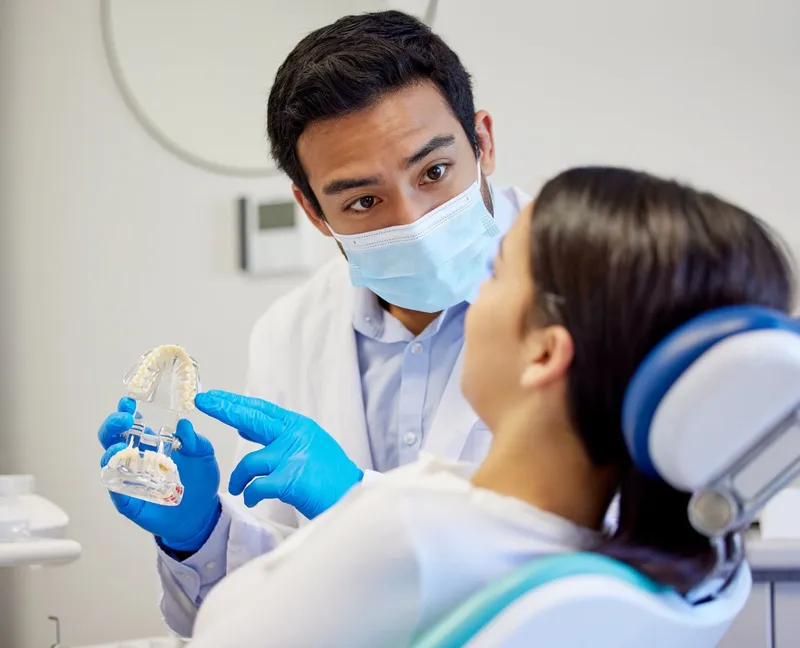
How grafting fits into your implant plan.
Grafting is one step inside your implant plan, not a separate project. It's timed so the bone heals properly before the implant takes any load.
3D imaging & assessment
We measure the bone at each site involved before grafting is recommended, so the decision is based on a measurement, not a guess.
Grafting, only where needed
Graft material is placed at the sites that need it, then left to join your own bone. Some sites may need it and others may not.
Healing time
The graft is usually given time to heal before the implant goes in. Sometimes the implant can be placed at the same time, and your dentist will explain which applies to you.
The implant, once the base is ready
When the site is stable, the implant is placed and the rest of your plan carries on, with reviews along the way.
Timelines vary between individuals, because grafting adds its own healing time. We'll give you a realistic timeline once we've assessed your site.
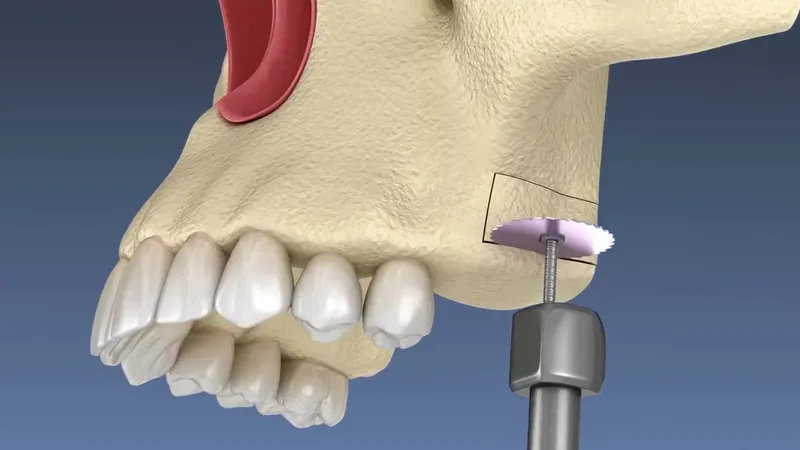
A sinus lift is grafting for the upper back jaw
Upper back jaw? It may be a sinus lift instead.
A sinus lift is a type of bone grafting used only in the upper back jaw, where the maxillary sinus can sit close to the bone. The sinus lining is gently raised and graft material placed underneath to add the height an implant needs.
Like other grafting, it's only recommended when your imaging shows it's needed. Read the sinus lift page →
Any surgical or invasive procedure carries risks. Before proceeding, please seek a second opinion from an appropriately qualified health practitioner.
What it means for cost.
If you need bone grafting, it's included in your written implant plan, so you'll see the full cost after we've assessed your jaw with 3D imaging and before you agree to anything. Nothing is added without being explained first. For context, as at September 2026 a single implant with its crown starts from $5,000 at our clinic, and any grafting is itemised on top of that.
Payment plans can spread the cost into smaller, regular amounts. The online estimator covers plans up to a $12,000 total, Humm's fees included; for a bigger plan, the clinic will talk it through with you. Repayment figures from the estimator are illustrative and use Humm/NDP's own plan-fee formula for the term selected, so Humm's fees are already included. Finance depends on Humm's own eligibility criteria and approval, which may not be granted.
Curious what an implant plan might cost week to week? Open the repayment estimator → →
Estimate only. It is not a quote or credit approval. Your actual cost is confirmed at consultation and depends on whether bone grafting or a sinus lift is needed.
We accept






Bone grafting questions, answered.
Let's check your foundation first.
A consultation with 3D imaging at our Bacchus Marsh clinic is usually enough to tell whether bone grafting applies to you at all, with a written cost before you decide anything.
This page sits within the wider dental implants pathway, which also covers the full-arch All-on-X implant dentures route.