01 / Children
Eating textures that feel hard.
Gagging on lumpy food, refusing meat or bread, packing food into the cheeks, or eating very slowly. How freely the tongue moves can play a part in how children learn to chew and swallow.

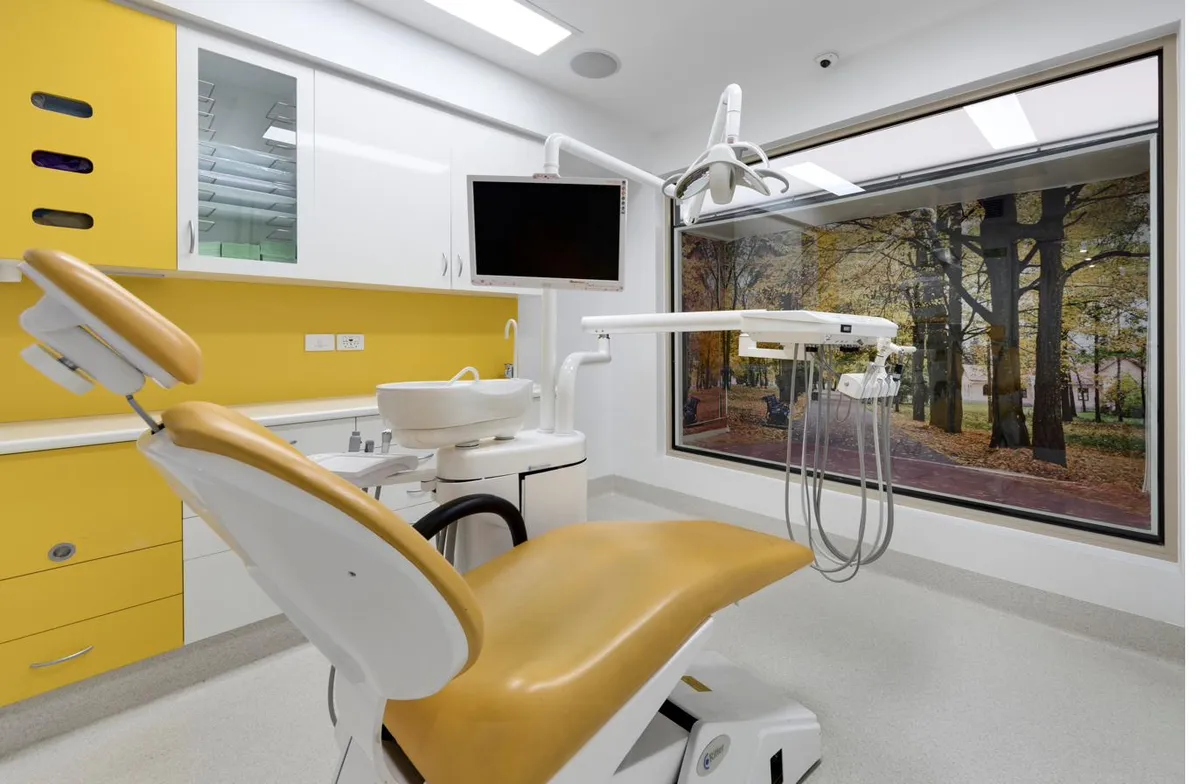
Maybe a speech pathologist mentioned a "tongue tie", maybe a dentist did, or maybe you've wondered for years why your tongue never quite reaches. Here's what an assessment at our Bacchus Marsh clinic involves, and what happens if release turns out to be the right next step.
You probably don't need one more person telling you it might be a tongue tie. What helps more is knowing what the assessment involves and what a release visit actually feels like, whether you're asking for your child or for yourself.
So that's where we'll start: plainly, one step at a time, and with no pressure to go ahead until the assessment has given you an answer.
— The Magical Smiles Bacchus Marsh team
A tight frenulum shows up differently at different stages of life. It might be a child whose speech sounds are slow to come, a teenager with a gap between the front teeth, or an adult who has always felt their tongue sits low. These are the patterns we look at during an assessment.
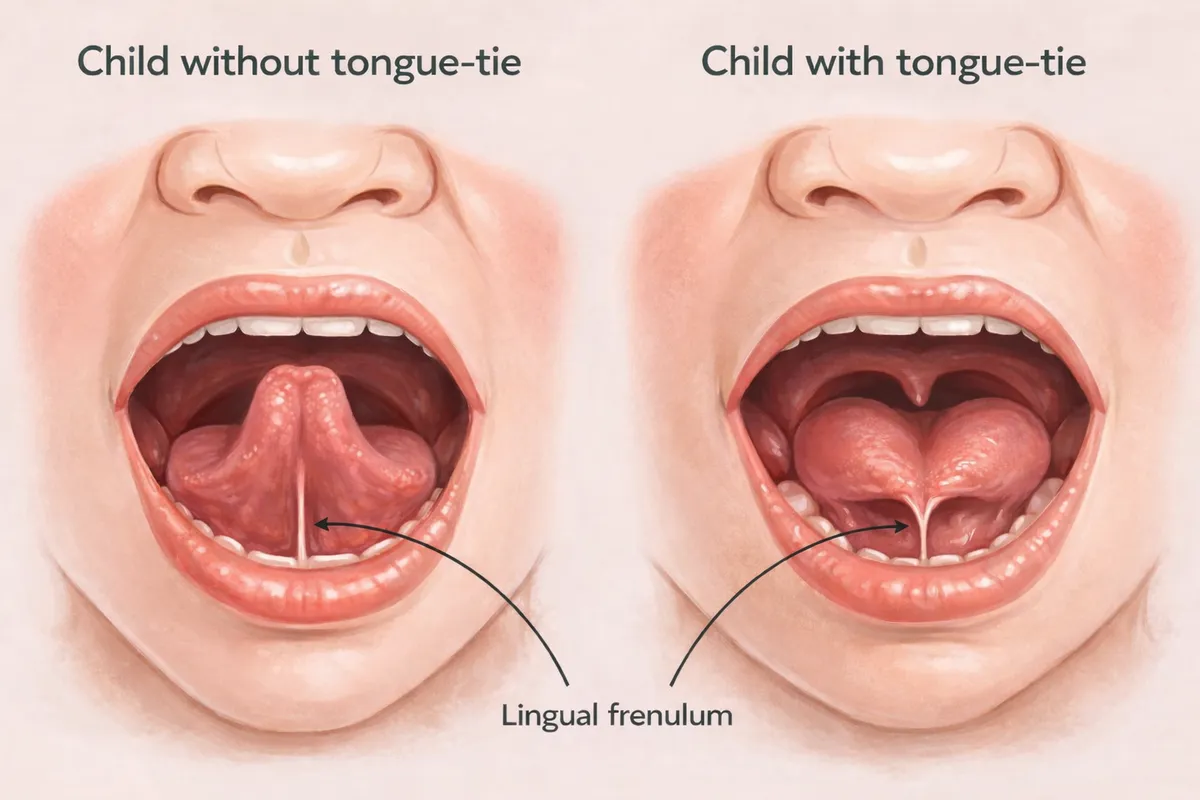
The lingual frenulum is the thin band of tissue under the tongue. In most mouths it's loose enough that the tongue lifts and stretches freely. When it's shorter, thicker, or attached further forward, tongue movement is restricted — that's what's meant by a "tongue tie." A similar band under the upper lip can hold the lip down instead; that's a lip tie. The same laser handles other soft-tissue work at the clinic too, such as laser gum depigmentation. Tongue tie is not rare in babies: a 2023 literature review reports infant prevalence anywhere from 0.1% up to 12% (accepted 7 December 2023), and many people with a short frenum have no problems at all, as the Better Health Channel (reviewed 4 August 2026) notes.
The diagram is general and for illustration only; anatomy and severity vary from person to person. An in-chair functional assessment is what decides whether release is appropriate for you or your child.
Gagging on lumpy food, refusing meat or bread, packing food into the cheeks, or eating very slowly. How freely the tongue moves can play a part in how children learn to chew and swallow.
Ongoing trouble with 'r', 'l', 's' and 'th', sounds that need the tongue tip to lift and flex. Your speech pathologist stays in the lead; release is only considered when restriction is clearly part of the picture.
A gap between the upper front teeth (a diastema) that a thick labial frenum can help hold open. It often comes up during orthodontic planning, and it shows up in every photo.
Trouble lifting the tongue, or a long-held sense that it has always sat a little low. Adults can be assessed too, and the assessment tells you whether a tie is actually part of the problem.
A tight frenum under the tongue that pulls on the gum edge can contribute to recession behind the bottom front teeth. Release is sometimes part of gum care, to take that strain off.
An upper lip frenum that contributes to a gap, a spot where food keeps catching, or recession at the front. Often something people have noticed for years without knowing it could be looked at.
A laser frenectomy uses precisely tuned light, not a blade, to release the band of tissue that holds the tongue or lip. The Er:YAG wavelength is strongly absorbed by the water in soft tissue, so it removes tissue in tiny, controlled increments.
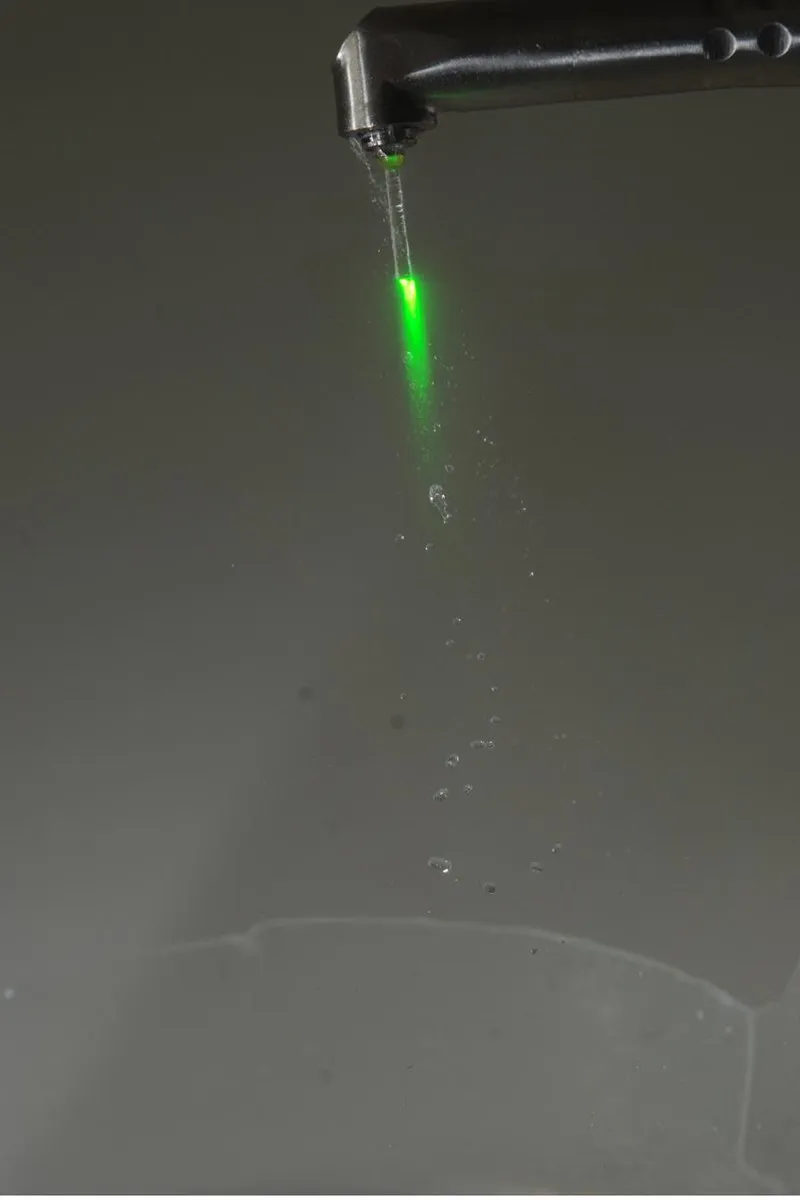
Soft tissue is mostly water, so Er:YAG light is taken up right where it is aimed. The laser removes the restrictive tissue in small, controlled passes, which means the laser step itself is usually brief, stitches are usually not needed, and bleeding is usually light.
In the chair, it runs much like other dental visits. The area is numbed first, the laser step is short, and you leave knowing how to do your aftercare stretches and when your review is.
Magical Smiles Bacchus Marsh uses the Fotona LightWalker, a dual-wavelength Er:YAG and Nd:YAG dental laser system. For tongue and lip tie release we use the Er:YAG wavelength, which is strongly absorbed by the water in soft tissue and suits small, delicate areas of the mouth.
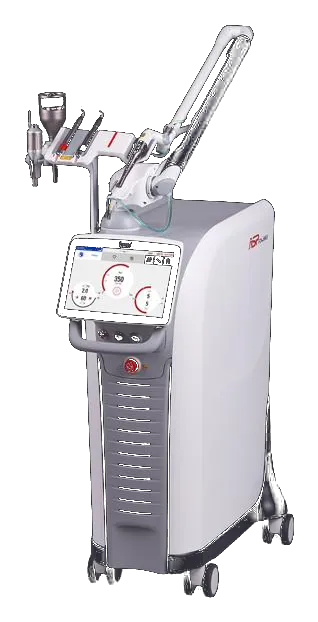
Releasing a frenulum calls for fine control of depth on a very small structure. The LightWalker gives our Bacchus Marsh dentists that control, which is why it's the tool we use for this procedure.
The release itself is brief. Most of the time goes into what surrounds it: an assessment that gets the answer right, consent you fully understand, and aftercare you can actually manage at home.
We start with what brought you in, any speech or eating concerns, and a look at the teeth and gums. There's no rush, and you're welcome to bring a support person.
AssessmentWe check how far the tongue lifts and moves side to side, listen to speech where that's the concern, and check the teeth and gums. Bring any notes from your speech pathologist, orthodontist or GP; they help us see the whole picture.
AssessmentWe explain what we found, whether release is genuinely indicated, what to expect and the alternatives, including leaving it alone. If release is recommended, we talk through the cost and can check your health fund cover before you go ahead.
AssessmentThe area is numbed with The Wand, a computer-controlled system intended to make the injection feel less noticeable. Everyone in the room wears protective eyewear.
TreatmentOnce the area is fully numb, the laser releases the band in small, controlled passes. The laser step is usually brief, there's no scalpel or scissors, and stitches are usually not needed.
TreatmentA gentle rinse, then a check of tongue lift, lip movement and swallowing. The first movements can feel unfamiliar while the area is still numb.
TreatmentWe show you the gentle stretches to do at home, how often to do them and for how long. If anything worries you afterwards, call the clinic on (03) 8001 7008.
TreatmentA follow-up visit to check healing and movement, and to go over the stretches with you so you know you're on the right track.
Follow-upScissor and laser release are both clinically valid techniques, used widely in Australia. Here's how the laser approach usually differs in practice. Your dentist will explain which suits your situation at the assessment. The Better Health Channel describes a frenectomy as snipping the frenum with surgical scissors or laser, considered once a trained health professional has diagnosed tongue-tie and other methods have not been successful. A 2025 systematic review of frenectomy in children under five (accepted 27 September 2025) says frenectomy may enhance breastfeeding outcomes but that limited, varied studies preclude firm clinical recommendations, and that professional opinion is divided: only 10% of paediatricians and 30% of otolaryngologists believe ankyloglossia affects feeding, while 69% of lactation consultants report breastfeeding difficulties attributed to it.
Tongue tie care can involve dentistry, speech pathology, orthodontics and gum care. At our Bacchus Marsh clinic we aim to make our part of it the calm, predictable part you don't have to worry about.
Laser dentistry needs specific equipment and training, which our Bacchus Marsh team has completed. Our principal dentist, Dr Rachna Yadav, has also completed the Untangling Tongue Ties Advanced Course.
A dual-wavelength Er:YAG and Nd:YAG system. The Er:YAG wavelength does the fine soft-tissue work this procedure needs.
A speech pathologist, orthodontist or GP may already be involved. Bring any notes or reports they've given you, and we'll take them into account at the assessment.
We leave time for questions and explain each step before it happens, so nobody, child or adult, is hurried through the visit.
When local anaesthetic is needed, we use The Wand, a computer-controlled system intended to make the injection feel less noticeable.
Not every tie needs releasing, and we'll say so when that's what we find. The consultation answers the question; it doesn't commit you to anything. That matches the Australian Dental Association's policy statement (amended 24 October 2025), which says not everyone diagnosed with ankyloglossia needs surgery and that non-surgical management should be considered first, and the NHS (page last reviewed 20 March 2024), which says treatment is not usually needed if tongue-tie is not causing any problems.
Answered plainly by the Bacchus Marsh team you'd see in the chair. Ask anything else when you call (03) 8001 7008. We'd rather you ring with twenty questions than book unsure.
Everything happens at Magical Smiles Bacchus Marsh on Gisborne Road: the assessment, the release and the review. Here's how to book, what to bring and how paying works.
Maddingley · Darley · Hopetoun Park · Long Forest
Speech pathologist · orthodontist · GP
HICAPS · Afterpay · Zip · humm
Book a consultation at Magical Smiles Bacchus Marsh when it suits you. We'll assess properly, explain plainly and only recommend release if it's genuinely needed. The assessment answers the question and doesn't commit you to anything.