Toothache that wakes you.
Throbbing pain at night, or a dull ache you keep noticing at work or on the school run. The nerve inside the tooth is often inflamed or infected by this stage, and that does not heal by itself.

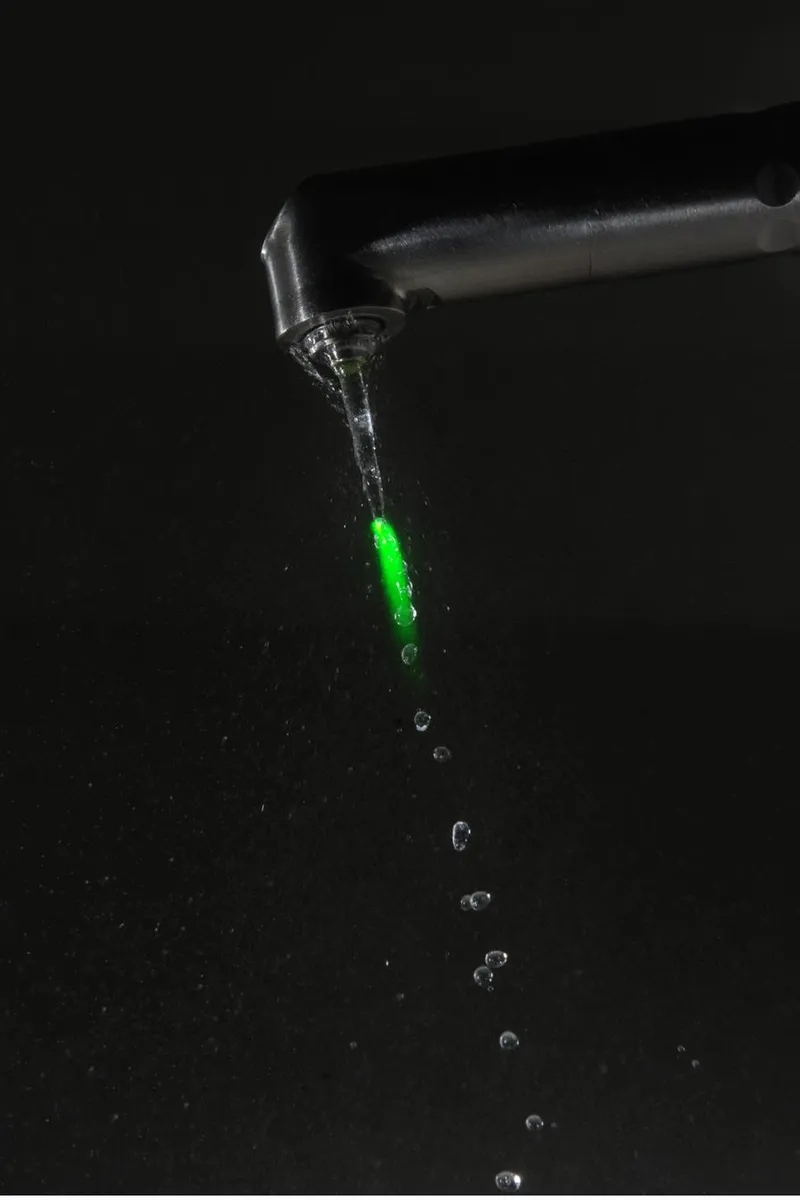
You've been chewing on one side and dodging cold drinks, hoping the tooth settles down. At Magical Smiles Bacchus Marsh, laser-assisted root canal treatment offers a calmer way to treat that tooth and keep it, rather than have it taken out.
You probably don't need another lecture about why root canals matter. What you need is a clearer picture of what the actual appointment will feel like — and how the laser changes the part that worries most people.
So let's start there. No pressure, just the facts in plain English from the dentists who would be looking after your tooth here in Bacchus Marsh.
— The Magical Smiles Bacchus Marsh team
A toothache that keeps coming back rarely settles the way we hope. Tooth decay is one of the things that can damage the pulp inside a tooth, and untreated decay is common: 32% of Australian adults with their own teeth had at least one tooth with untreated decay in 2017–18, and adults who usually visited a dentist for a problem were nearly twice as likely to have it as those who usually went for a check-up (44% compared with 24%), according to the Australian Institute of Health and Welfare (report updated 6 August 2026). Among children aged 5 to 10, 27% had at least one baby tooth with untreated decay. The Better Health Channel (reviewed 14 July 2025) adds that a damaged pulp sometimes causes no symptoms at all and is found on X-rays at a check-up. If any of these sound familiar, a consultation at our Gisborne Road clinic will show what's happening and what your options are.
Throbbing pain at night, or a dull ache you keep noticing at work or on the school run. The nerve inside the tooth is often inflamed or infected by this stage, and that does not heal by itself.
A short twinge from ice cream is one thing. Pain that keeps going for thirty seconds, a minute, or longer after the trigger has passed is a different signal — and worth investigating before it escalates.
A single tooth changing colour — particularly after past trauma — often means the inner pulp has lost vitality. Laser endodontics can be considered when imaging confirms the diagnosis.
A small bump on the gum, a bad taste, or facial swelling around a tooth — these usually point to infection at the root tip. This needs urgent assessment. Call the clinic directly.
Sometimes a previously root-canalled tooth becomes reinfected months or years later. Laser-assisted retreatment can be considered when imaging shows the original treatment is incomplete or has failed.
A knock to a front tooth, or a back tooth that has cracked under load, can damage the nerve even when the outside looks fine. An early check usually leaves you with more options.
A tooth's root canal is not a single tube. It is a main channel with many small branches and tubules running through the dentine. Files clean and shape the main canal and cleaning solutions reach further; the laser is used alongside both, at specific stages, to help reduce bacteria inside the canal system. healthdirect (last reviewed February 2025) notes that a tooth can have up to 4 canals, and that antibiotics on their own don't clear a root canal infection, which is why cleaning, disinfecting and sealing the canals matters.
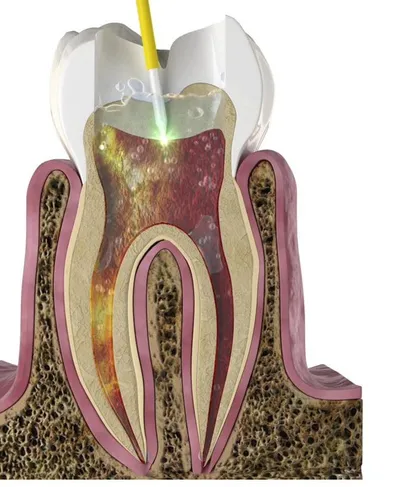
Laser energy used alongside files and cleaning solutions inside the canal system.
Even with modern rotary instruments, part of the canal wall can be left untouched after mechanical shaping. Irrigating solutions help, but only where they actually reach.
The laser's energy can help reduce bacteria inside the pulp chamber and root canals. It works alongside the usual cleaning and shaping, not instead of it.
Tissue removal: laser energy may help remove damaged or infected pulp tissue from inside the tooth. Canal preparation: once the canals have been shaped with standard instruments, the laser can help clear debris from the canal walls before filling.
The light energy may provide additional disinfection within the canal system, complementing the antimicrobial solutions your dentist uses. Every tooth is assessed first, and your dentist explains how the laser fits into your treatment.
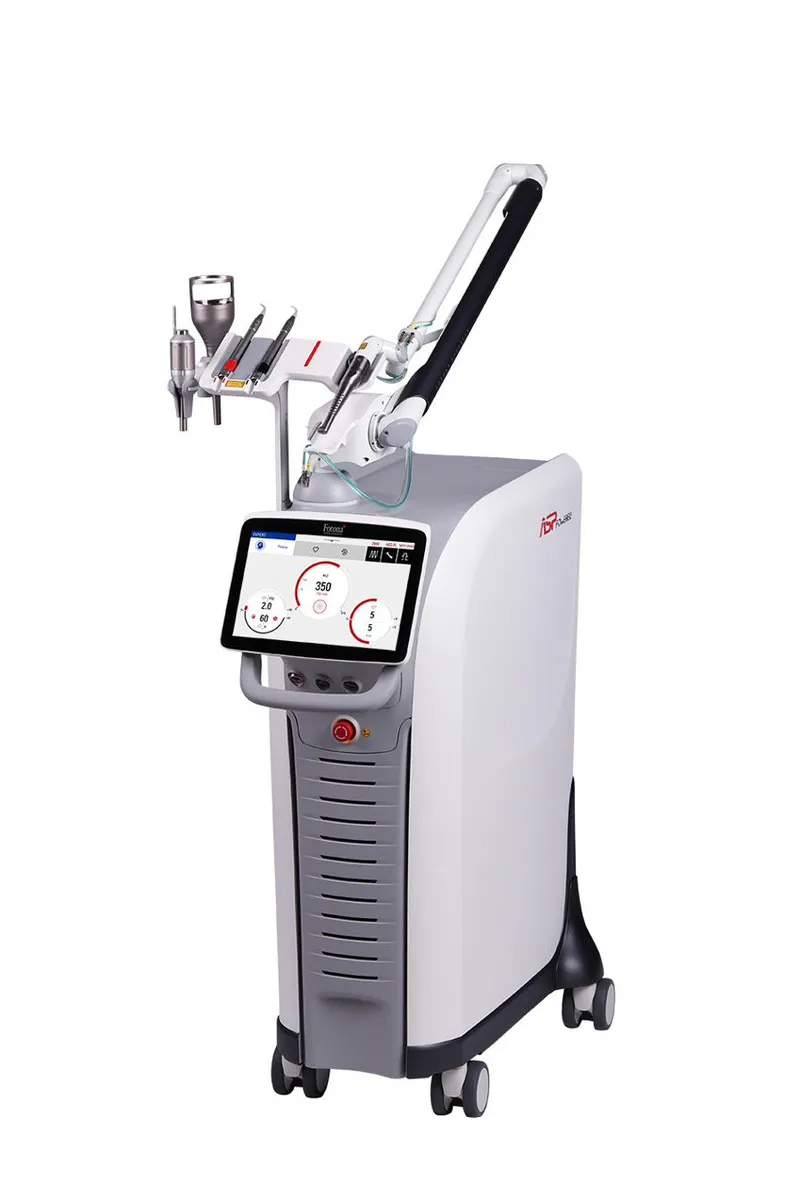 Fotona LightWalker
The Fotona LightWalker is a dual-wavelength dental laser used for endodontics, periodontics, soft-tissue surgery and beyond. Each wavelength suits a different kind of tissue, and your dentist decides how the laser is used for each tooth.
At our Bacchus Marsh clinic we use it to help clean and disinfect root canals alongside conventional root canal techniques, as well as for gum and soft-tissue care. Laser dentistry needs specific equipment and training, and our team has completed that training.
Many people put off root canal treatment because they don't know what the appointment involves. Here is the full sequence at our Bacchus Marsh clinic. Front and back teeth follow the same pattern; molars simply have more canals to clean.
We examine the tooth, take a digital X-ray and, where needed, arrange 3D imaging. We talk you through what we see and the options, including alternatives to root canal treatment.
~ 30–45 minLocal anaesthetic is given with The Wand, a computer-controlled delivery system. The flow is slow and steady, which many people find makes the injection feel less noticeable.
~ 5 minA soft latex-free sheet isolates the tooth from saliva. It keeps the area clean, stops anything tasting unpleasant, and lets you breathe and swallow normally throughout.
~ 5 minA small opening through the top of the tooth gives access to the canals. Fine rotary files shape the main canals to receive irrigation. You will feel pressure but no sharpness.
~ 20–30 minOnce the canals are shaped, the laser is used alongside the cleaning solutions to help reduce bacteria and clear debris from inside the canal system.
Short laser stepBefore the canal is sealed, the laser's light energy may add extra disinfection inside the canal system, complementing the antimicrobial rinses.
Before sealingThe canals are filled with a biocompatible sealer and gutta-percha — a flexible material that prevents bacteria re-entering. A temporary or permanent restoration is placed on top.
~ 15–25 minFor most back teeth a crown is recommended in the following weeks to protect the tooth from breaking. We book review visits with X-rays to check the area is healing.
Separate visitsBoth approaches are well studied and both can work well when carried out carefully. The difference is whether laser energy is added to the cleaning and disinfection steps, alongside the files and rinses used in every root canal.
This comparison is a general summary based on dental literature and clinical experience. Individual outcomes vary depending on tooth anatomy, severity of infection, restorability, and post-treatment care. We will discuss the right approach for your specific tooth at your consultation.
Root canal treatment shouldn't mean bouncing between practices. At Magical Smiles Bacchus Marsh we look after the diagnosis, the treatment and the final restoration at the one clinic on Gisborne Road.
Our Bacchus Marsh team has completed training in dental laser use and uses the Fotona LightWalker for suitable root canal cases.
Where a standard X-ray isn't enough, 3D imaging can show the canal shape and the area around the root tip, so the plan is based on a clear picture.
Computer-controlled anaesthetic delivery for the part of a dental visit many people dread. It is intended to make the injection feel less noticeable.
If you'd like to feel more relaxed, ask about sedation options at your consultation. There's no judgement and no pressure either way.
Your Bacchus Marsh dentist diagnoses, treats, restores and reviews the tooth at the one clinic, so you're not retelling your story somewhere new.
We're at 83 Gisborne Road, Bacchus Marsh, and open Monday to Saturday, 9am to 5pm, so appointments can fit around work and school.
These are the questions we hear most in consultation. If yours isn't here, call us on (03) 8001 7008 and we'll talk you through it.
It is designed to be gentle. Many people find it feels much like having a large filling: local anaesthetic is still used and the laser steps are short. Experiences vary with the tooth, the infection and your own sensitivity. Your Bacchus Marsh dentist explains each step before starting, and you can ask to pause at any point.
Most are completed over one or two visits of 60 to 90 minutes, depending on whether it's a front tooth with one root or a molar with several. Retreatments and complex anatomy may need another visit. We give you a clear timeline at your consultation.
Usually, yes, especially for back teeth that do heavy chewing. A root-treated tooth becomes more brittle over time and a crown helps protect it from breaking. Some front teeth can be sealed with a strong composite filling instead. Your dentist explains the options and what each involves, including the cost, before you decide.
Often, yes. Laser-assisted retreatment can be considered when a previously treated tooth has become reinfected or still shows inflammation on imaging. Laser energy can help disinfect areas that were hard to reach the first time. We use imaging at consultation to decide whether retreatment, surgery at the root tip or removal is the right path for your tooth.
The laser is used alongside standard root canal techniques at specific stages. Its energy can help reduce bacteria in the pulp chamber and canals, may help remove infected tissue, and can help clear debris from the canal walls before filling. Your dentist assesses each tooth first and explains how the laser fits into your treatment. The same laser is also used at the clinic for laser ceramic debonding.
Fees depend on the tooth (front teeth usually have one canal, molars three or four), how complex the canals are, the number of visits and the final restoration. Health fund rebates vary by fund and level of cover, so we give you an itemised quote with the item numbers and can check your cover before you go ahead. Afterpay, Zip and humm payment plans are available, subject to approval.
You're not alone. Worry is a common reason people delay root canal treatment, sometimes for years. We can discuss sedation options, use The Wand for local anaesthetic, build in breaks, and start with a consultation-only visit so you can meet the Bacchus Marsh team before deciding anything. Tell us you'd like to take it slowly.
With a well-sealed final restoration (usually a crown on a back tooth) and good home care, a root-treated tooth can last for many years. How long depends on how much sound tooth is left, the quality of the seal and how the tooth is used. We book reviews with X-rays to check healing at the root tip.
For children with damaged baby teeth or young permanent teeth, modified nerve treatments with laser disinfection are considered case by case, because children's teeth differ from adults'. We assess at consultation. Under the Child Dental Benefits Schedule (CDBS), eligible children can claim up to $1,158 over two calendar years (or $1,132 if their two-year period began in 2025), subject to Services Australia's eligibility rules.
Yes. Magical Smiles Bacchus Marsh, 83 Gisborne Road, offers laser root canal treatment with the Fotona LightWalker. Call (03) 8001 7008 or book online, Monday to Saturday, 9am to 5pm. If you're in pain now, say so when you call and we'll offer the earliest assessment we can.
Laser root canal treatment is available at Magical Smiles Bacchus Marsh on Gisborne Road. Here's how to book, where to go if you're in pain, and how paying works.
Bacchus Marsh · Maddingley · Darley
Call first and we'll advise you
HICAPS · Afterpay · Zip · humm
No commitment and no pressure. Your dentist checks the tooth, explains what the X-ray shows and outlines your options, laser root canal treatment among them. You decide what happens next, in your own time.