
Bacchus Marsh · Laser cavity treatment
Laser cavity treatment in Bacchus Marsh: a quieter way to treat that filling.
If the sound of the drill or the dread of the needle is what's kept you out of the chair, there's a different way to handle small cavities. At Magical Smiles Bacchus Marsh we use the Fotona LightWalker, a precise dental laser, to remove decay gently, often with little or no local anaesthetic. Quieter. No vibration. Designed for the appointments people quietly avoid.
What this page is about
A different chair experience
The cavity itself is small. The reason you've been putting it off is everything else.
Most people don't avoid the dentist because of pain in the moment. They avoid it because of the build-up — the sound of the high-speed drill the next room over, the rubbery taste of the numbing gel, the cheek that won't stop feeling weird for hours afterwards, the half-day off work, or the drive into Melbourne, for something that took ten minutes. So small cavities go untreated. And small cavities, given enough time, stop being small. The national numbers show it: in 2017–18, 32% of Australian adults with their own teeth had at least one tooth with untreated decay, and the figure was 44% for adults who usually visit a dentist for a problem, against 24% for those who usually book a check-up (Australian Institute of Health and Welfare, report updated 6 August 2026). The Better Health Channel (reviewed 28 June 2025) explains what happens next: as decay keeps taking mineral from the tooth, the cavity can reach the pulp, where the nerve is, and cause a toothache.
Laser cavity treatment changes the experience without changing the standard of care. The Fotona Er:YAG laser removes decay using short, precise pulses of energy that vaporise damaged tooth tissue while leaving healthy structure intact. The handpiece doesn't spin, doesn't vibrate, and doesn't produce the high-pitched whine that announces "filling" before anyone has touched your mouth. For many small and early-stage cavities, the procedure can be completed with little or no local anaesthetic — meaning you walk in, sit down, and walk out with the tooth fixed and your face still feeling like your face. The same platform is also used for laser ceramic debonding when a ceramic restoration needs to come off.
It's not a fit for every cavity, and we'll be honest with you about that at the consultation. Not every early spot needs a filling at all: healthdirect (last reviewed February 2025) notes that decay which hasn't yet made a hole can be treated with fluoride paste or varnish. But if you're the person who books a check-up, hears the word "filling," and then quietly delays the follow-up for six months — this page is written for you.
Who this is for
If you recognise yourself in any of these, read on.
Laser cavity treatment isn't a universal upgrade — it's an alternative that suits some teeth and some people more than others. These are the situations where patients most often ask us about it.
01
You've been putting off a small filling.
It came up at your last check-up. You said you'd book it. That was a while ago. The cavity is still small — for now. This is the moment laser treatment helps most.
02
The drill sound is the deal-breaker.
For some patients, the high-pitched whine is worse than the procedure itself. The laser doesn't make that sound. It clicks and pops gently, more like a tap than a tool.
03
You're not great with needles.
For small, early-stage cavities the laser is often gentle enough that no injection is needed. For some patients that single change is what makes the whole appointment workable.
04
Your child needs their first filling.
A first filling shapes how a child feels about the dentist for years. Quieter equipment and often no injection can make a meaningful difference to how that first appointment lands. It's a common moment: in the last national child oral health survey, around 4 in 10 children aged 5 to 10 (42%) had experienced decay in their baby teeth, and 27% had at least one baby tooth with untreated decay (AIHW).
05
You have a sensitive tooth.
The laser doesn't generate the friction heat that conventional drills do, and the constant cooling spray keeps the tooth at a comfortable temperature throughout.
06
You want a tighter bond.
The Er:YAG laser micro-etches the cavity surface as it works, leaving a textured surface that can support the bond of a tooth-coloured filling.
How it works
Light energy that knows the difference between decay and healthy tooth.
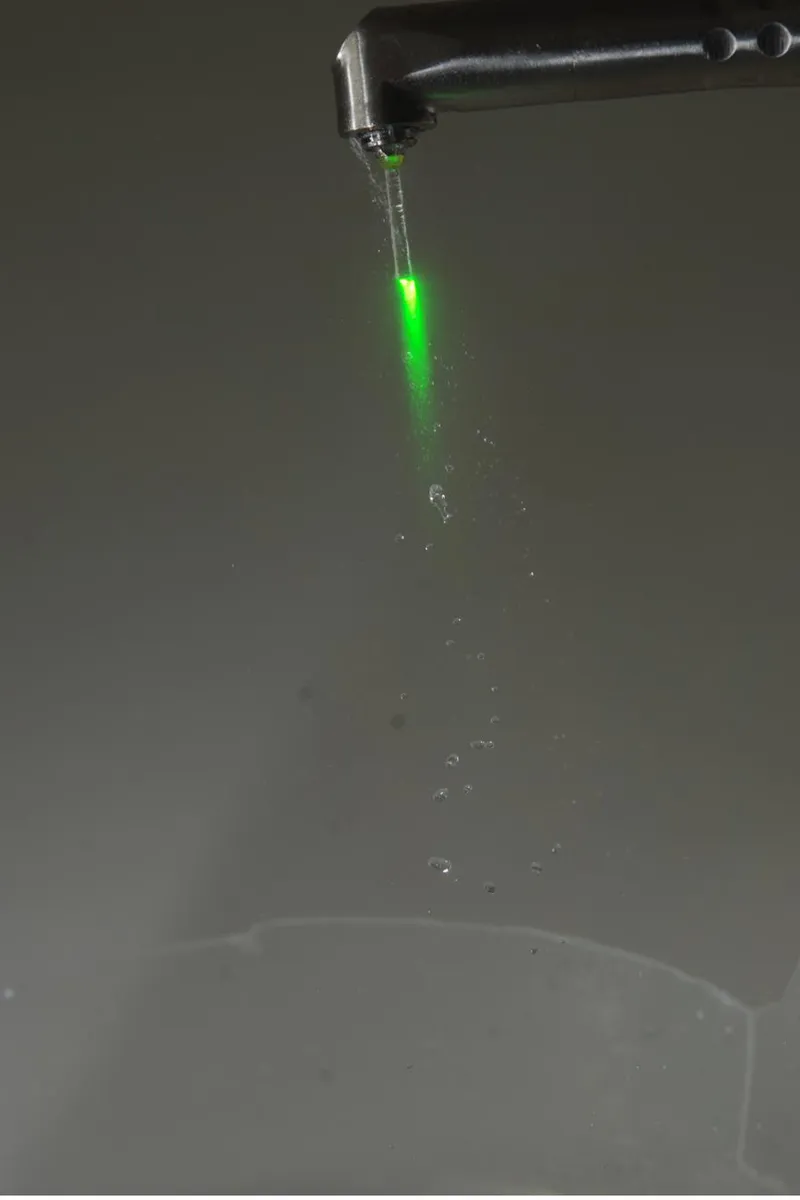
Lasers in dentistry aren't all the same. The Er:YAG wavelength was chosen for this work specifically because of how it interacts with one molecule — water — and that physics is what makes selective, gentle cavity removal possible.
i. The wavelength
Tuned to water, not the whole tooth.
The Er:YAG laser pulses at 2940 nanometres — a wavelength that's strongly absorbed by water and hydroxyapatite. Healthy enamel contains little water. Decayed tooth tissue contains far more. The result is selective: the laser energy preferentially affects the soft, damaged tissue and leaves healthy structure largely untouched.
ii. The pulse
Vaporisation, not friction.
Each laser pulse lasts a fraction of a second and converts the moisture inside decayed tissue into vapour. The tissue is removed in micro-thin layers without the heat, pressure, or mechanical vibration of a high-speed bur. A fine cooling water spray keeps the surrounding tooth at a comfortable temperature throughout.
iii. The surface
A bonding surface ready for the filling.
As the laser removes decay, it simultaneously leaves a clean, micro-roughened surface — a kind of natural etching. This can support strong adhesion of the tooth-coloured composite filling that's placed in the same appointment, often reducing the need for additional acid etching steps.
iv. The limits
What the laser doesn't do.
The same physics that makes Er:YAG selective for decay also means it can't efficiently remove existing metal or composite fillings — those still require conventional instruments. Larger or deeply embedded cavities may also benefit from a combination approach. We'll be upfront about which method suits your tooth.
 Fotona LightWalker
The equipment
One platform. Two wavelengths. Used here in Bacchus Marsh.
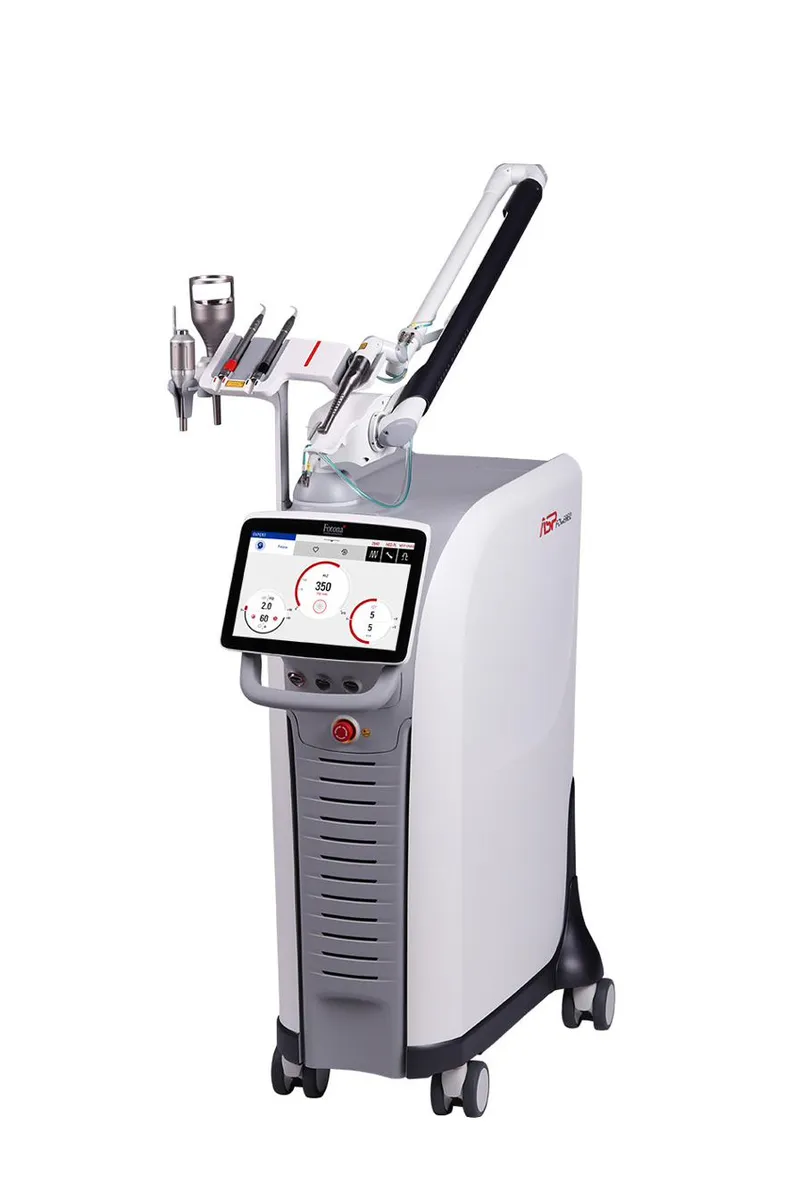
The Fotona LightWalker is a dual-wavelength dental laser — Er:YAG for hard tissues like tooth structure, and Nd:YAG for soft tissues like gums. For cavity treatment, the Er:YAG arm does the work: precise, water-mediated removal of decay with constant cooling.
Laser dentistry needs specific equipment and training, and our Bacchus Marsh team has completed that training. Familiarity matters more than novelty, so every setting is chosen deliberately for the specific tooth in front of us.
- Wavelength used
- Er:YAG · 2940 nm
- Cooling
- Integrated fine water spray
- Eye protection
- Provided for patient and team
- Operated by
- Our laser-trained Bacchus Marsh team
The appointment
What actually happens, step by step.
Uncertainty about the process is what keeps most people away. So here's the full sequence, from the moment you sit down to the moment you walk out. No surprises.
i.
Examination and X-ray
We confirm the size and location of the cavity, check for anything else that might affect treatment, and discuss what we're seeing on the imaging together.
5–10 minutes
ii.
The conversation
We talk through whether the laser is suitable for this particular tooth, what the alternatives are, and what to expect during and after. You stay in the driver's seat.
5 minutes
iii.
Comfort setup
You're settled into the chair, given protective eyewear (the laser is bright), and we run a brief test pulse on a non-sensitive part of the tooth so you know exactly what to expect.
3 minutes
iv.
Anaesthetic — only if needed
For small and early-stage cavities, often no injection is required. For deeper cavities, we may use The Wand — a computer-controlled system that delivers anaesthetic slowly and steadily.
0–5 minutes
v.
Decay removal
Short laser pulses with a fine cooling water spray. You'll hear soft tapping or popping — not the drill whine. Most patients describe the sensation as cool and gentle.
10–20 minutes
vi.
Surface preparation
The cavity is checked, gently dried, and prepared for bonding. Because the laser leaves a clean, micro-etched surface, this step is often quicker than with a drill.
5 minutes
vii.
Tooth-coloured filling
A composite filling is shaped and bonded in matching layers, then set hard with a soft blue light. We sculpt it so it matches the natural anatomy of the tooth.
10–15 minutes
viii.
Bite check and polish
We check that the filling sits naturally with the opposite tooth, polish the surface so it feels smooth on the tongue, and talk you through what to expect over the next 24 hours.
5 minutes
Side by side
How the laser-assisted appointment actually differs.
Conventional treatment isn't the wrong choice — for many cavities it's still the right one. This is a plain-English comparison of what changes in the chair when the laser is suitable.
Conventional approachHigh-speed drill
Laser-assistedFotona Er:YAG
Sound
High-pitched continuous whine from the rotary handpiece.
Soft, intermittent tapping or popping — quieter overall.
Vibration
Significant — the spinning bur transmits through the tooth.
None — the laser has no moving mechanical part touching the tooth.
Heat
Friction heat is generated; managed with constant water cooling.
Brief pulse heat only; constant cooling spray throughout.
Local anaesthetic
Usually required for all but the most superficial cavities.
Often little or none for small, early cavities; case-dependent.
Precision
Mechanical cutting at the scale of the bur tip.
Micron-scale photoablation — selectively targets decayed tissue.
Best suited to
Larger cavities, replacing old fillings, complex restorations.
Early and small to medium cavities; anxious patients; children.
Recovery
Numbness from anaesthetic can last 2–4 hours after the appointment.
When no anaesthetic is used, you can eat, talk and work straight after.
Why Magical Smiles
Six things that shape the way we do this work.
Equipment alone doesn't make an appointment gentle. How the team uses it, plans for it, and talks you through it is what shifts the experience.
i.
Trained on the laser, not just licensed.
Laser dentistry needs specific training as well as equipment, and our Bacchus Marsh team has completed it. The settings are tailored to your specific tooth, not pulled from a default.
ii.
An honest recommendation.
If the laser is the better choice for your cavity, we'll say so. If conventional treatment is more reliable for what you're facing, we'll say that too — and explain why in plain language.
iii.
A plan, before the chair.
You'll know what's happening, in what order, and roughly how long it takes before we begin. No surprise upsells once you've sat down. No mid-procedure "we also found another one."
iv.
Comfort tools beyond the laser.
The Wand for slow, computer-controlled anaesthetic delivery if it's needed. Sedation options to discuss if you feel anxious. Children's appointments planned to feel low-pressure.
v.
One local clinic, six days a week.
We provide laser cavity treatment at 83 Gisborne Road, Bacchus Marsh. The clinic is open Monday to Saturday, 9am to 5pm, so a filling can fit around work and the school run.
vi.
Fees explained up front.
We talk through the cost before any treatment begins and can check your health fund cover first. HICAPS claims on the spot, CDBS for eligible children, and Afterpay, Zip and humm payment plans, subject to approval. Fillings are on Services Australia's list of basic services the CDBS covers (page updated 1 January 2026).
Common questions
The things people quietly wonder, asked out loud.
If anything here doesn't quite answer your question, call us on (03) 8001 7008. We'd rather explain it on the phone than have you guess.
Is laser cavity treatment painful?
Many patients describe the feeling as a series of soft taps with a fine, cool water spray, quieter than a drill and without the vibration. Many small and early-stage cavities can be treated with little or no local anaesthetic, though deeper decay may still call for the standard numbing approach. Your dentist will assess what's likely to be most comfortable for your tooth at the consultation.
Do you still need a needle for laser fillings?
Often, no — especially for small, early cavities in healthy teeth, where the laser is gentle enough that local anaesthetic isn't required. For larger or deeper cavities, or for teeth that are already sensitive, anaesthetic may still be the kinder option. If it is needed, we use The Wand, a computer-controlled system that delivers anaesthetic slowly and steadily.
How does the laser actually remove decay?
The Er:YAG laser emits short pulses of energy at a wavelength (2940 nm) that is strongly absorbed by water inside tooth structure. Because decayed tooth contains more water than healthy enamel and dentin, the laser energy preferentially vaporises the softer, damaged tissue while sparing healthy structure. A constant fine water spray cools the tooth throughout.
Is the laser suitable for children?
It can be a good option for many children, particularly those who find the sound or sensation of the drill distressing. The laser is quieter, doesn't vibrate, and often doesn't require an injection — which makes the appointment easier for anxious kids. Suitability depends on the cavity and the child. Our Bacchus Marsh team will talk you through what's appropriate, including whether the Child Dental Benefits Schedule (CDBS) applies.
How long does a laser filling appointment take?
Most single-tooth laser cavity treatments take 30 to 60 minutes from start to finish, including the bite check at the end. Larger or more complex cavities may take longer. We'll let you know what to expect when we plan your appointment.
Can the laser replace my old metal or composite fillings?
Not directly. The Er:YAG laser is designed to work on natural tooth structure and decay. Existing metal or composite fillings need to be removed using conventional instruments. The laser can be used afterwards to clean and prepare the surrounding tooth for the new restoration.
Does the laser get hot? Is it safe for the tooth?
The Er:YAG laser pulses for fractions of a second at a time, and the handpiece delivers a fine cooling water spray throughout. This keeps the tooth at a safe temperature — quite different from the friction heat created by a high-speed drill. Both you and the dental team wear protective eyewear during treatment.
Does Medicare or private health cover laser cavity treatment?
Private health cover depends on your fund and level of extras cover, and many funds pay no extra benefit because a laser was used. Under Medicare's Child Dental Benefits Schedule (CDBS), eligible children can claim up to $1,158 over two calendar years (or $1,132 if their two-year period began in 2025). We can check your cover and go through costs and any rebates with you before treatment begins.
Can I have laser cavity treatment in Bacchus Marsh?
Yes. Magical Smiles Bacchus Marsh, 83 Gisborne Road, offers laser cavity treatment with the Fotona LightWalker. The clinic is open Monday to Saturday, 9am to 5pm. Call (03) 8001 7008 or book online, and your dentist will check at the exam whether the laser suits your tooth.
Is laser cavity treatment new or experimental?
Er:YAG dental lasers have been used clinically for cavity preparation for more than two decades and are widely supported in the peer-reviewed dental literature. At our Bacchus Marsh clinic, the laser is used by a team that has completed dental laser training.
Where to come in
Laser fillings close to your kitchen, your work and the school run.
Magical Smiles Bacchus Marsh runs the Fotona laser on Gisborne Road, a short drive from Maddingley and Darley. Here's how to book, what it means for children, and how paying works.
A first filling
Fees & funds
Every step of laser cavity treatment happens at our Bacchus Marsh clinic on Gisborne Road.
Across the laser suite
Other things the same equipment helps with.
The Fotona LightWalker is used across a range of treatments — each tuned to a different tissue and a different goal.
When you're ready
The cavity will keep getting smaller in your head and larger in your tooth.
Six more months of putting it off looks a lot like the last six. If you'd like to see whether laser treatment suits your particular filling, book a consultation — there's no commitment to proceed, and we'll be upfront if conventional treatment is the better fit.