✦ Now welcoming new patients  ·  Same-day emergency appointments where possible  ·  Afterpay, SuperCare & all major health fundsBacchus Marsh · (03) 8001 7008
Metal, ceramic or Fastbraces — for kids, teens and adults

Braces in Bacchus Marsh, explained before you commit.

Braces use small brackets and a wire to guide teeth into a planned position, adjusted over a series of visits. At Magical Smiles Bacchus Marsh we offer traditional metal braces, clear ceramic braces and Fastbraces, starting from $4,500 per arch. Here's how the three compare, what treatment involves, and where an early option might fit if it's your child you're thinking about.

Does this sound familiar?

Most bite problems don't hurt. They just get in the way.

Crowding, gaps and an uneven bite usually build up quietly. You notice them when food keeps catching in the same place, when brushing around overlapping teeth takes longer than it should, or when a dentist mentions your child's bite at a check-up.

  • Teeth that overlap or crowd, making them harder to clean properly.
  • Chewing that feels uneven, or a jaw that clicks or feels tense.
  • Assuming braces are only for teenagers — they aren't, provided your teeth and gums are healthy.
  • Noticing crowding in your child's teeth and not knowing whether it's too early to ask.

If any of that sounds close, there's more choice than a single bracket-and-wire system — and for younger children, sometimes a gentler first step than braces altogether.

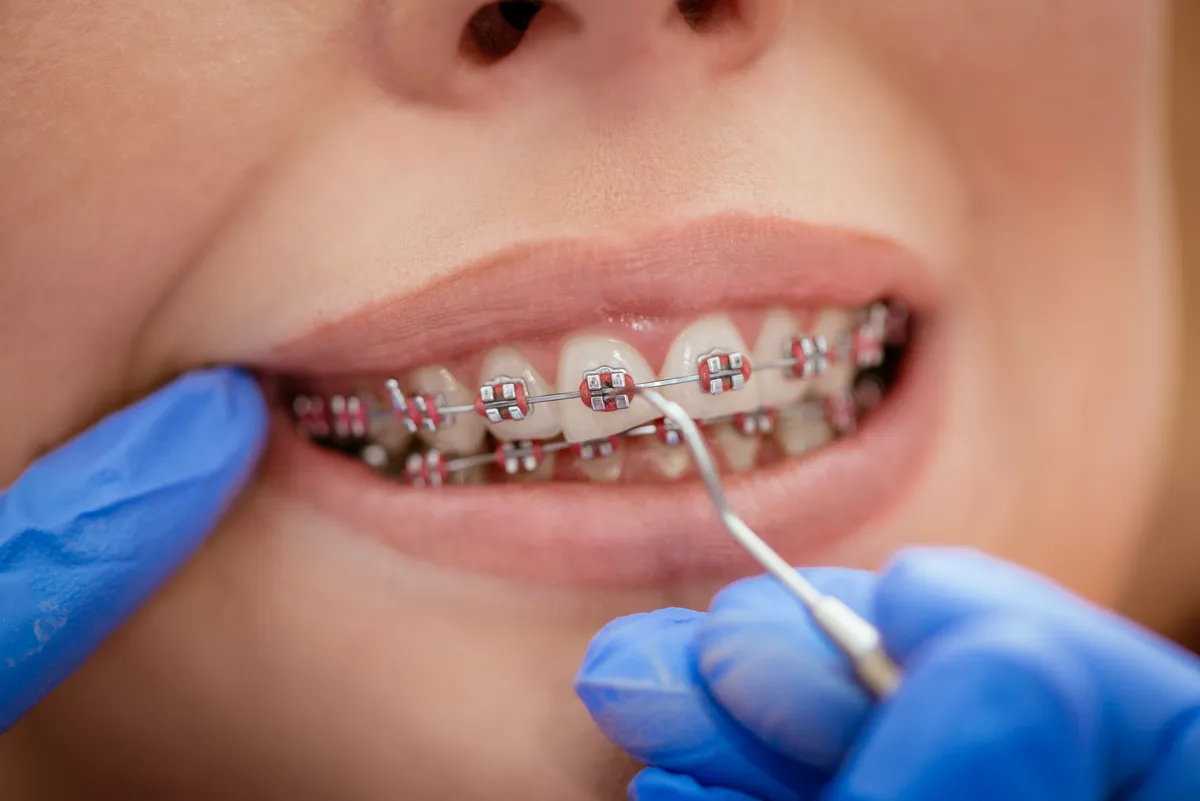
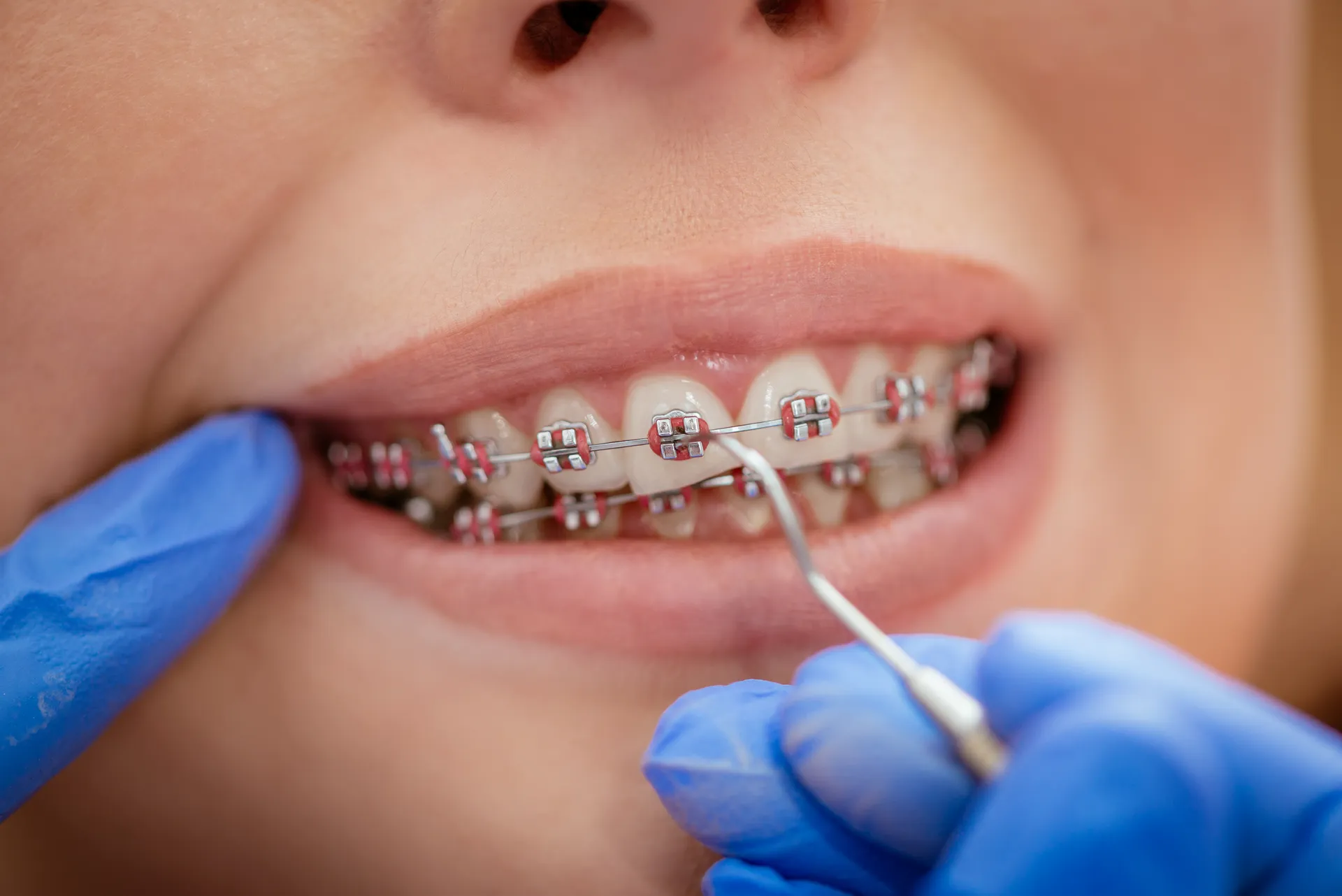
Close-up of a patient's teeth with metal braces brackets and an orthodontic tool
Brackets, a wire and regular adjustments
The plain-English version

How do braces work?

Every fixed brace system works the same basic way. A small bracket is bonded to each tooth with dental adhesive, and an archwire runs through the brackets. Small elastic bands hold the wire in place. The wire applies light, steady pressure, and the bone around each root gradually remodels so the tooth can move.

At regular appointments we adjust the wire or change the bands to keep teeth moving along the plan. The main difference between metal, ceramic and Fastbraces is what the brackets are made of, how visible they are and, for Fastbraces, the bracket and wire design. The animation alongside shows how the pieces work together.

A 3D look at how braces guide teeth
Three systems, one goal

Which type of braces is right for me?

All three straighten teeth with brackets and an archwire. They differ in how visible they are, what the brackets are made of and, for Fastbraces, the bracket design. Here's the plain comparison, so you can ask sharper questions at your consultation.

Braces are one part of orthodontics at Magical Smiles Bacchus Marsh, alongside clear aligners and Myobrace for children.

01 / The familiar option Close-up of traditional metal braces brackets and wire

Traditional metal braces

Small stainless-steel brackets on each tooth, joined by an archwire that's adjusted at intervals. It's a long-established, widely used approach that can manage crowding, gaps and bite problems such as overbites, underbites and crossbites.

If you'd like the detail on wear, care and sport, our metal braces page covers it.

Long established Broad case range Stainless steel
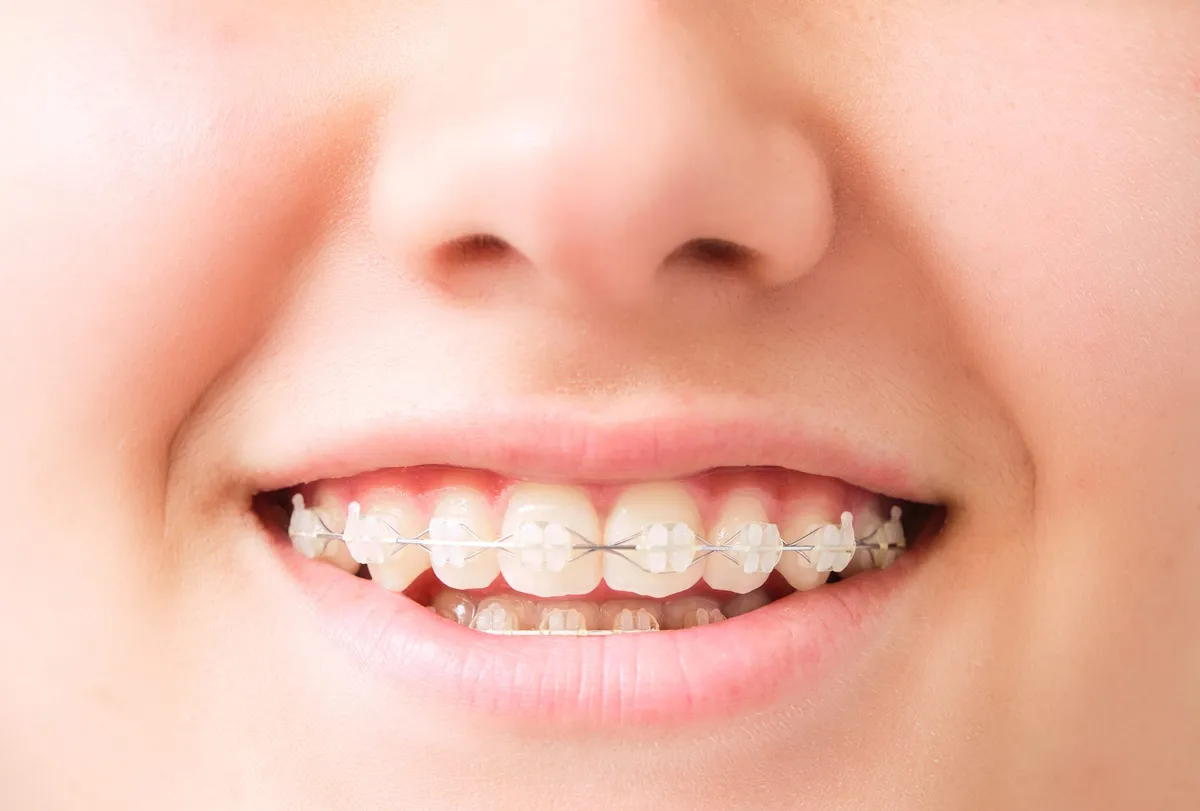
02 / The discreet option Close-up of clear ceramic braces brackets on teeth

Clear ceramic braces

Tooth-coloured or clear ceramic brackets that work exactly like metal braces but blend in with your natural teeth. A common pick for teens and adults who want a fixed brace without it being the first thing people see.

We'll talk through how ceramic brackets suit your bite and your cleaning routine before you choose.

Tooth-coloured brackets Less visible Assessed case-by-case
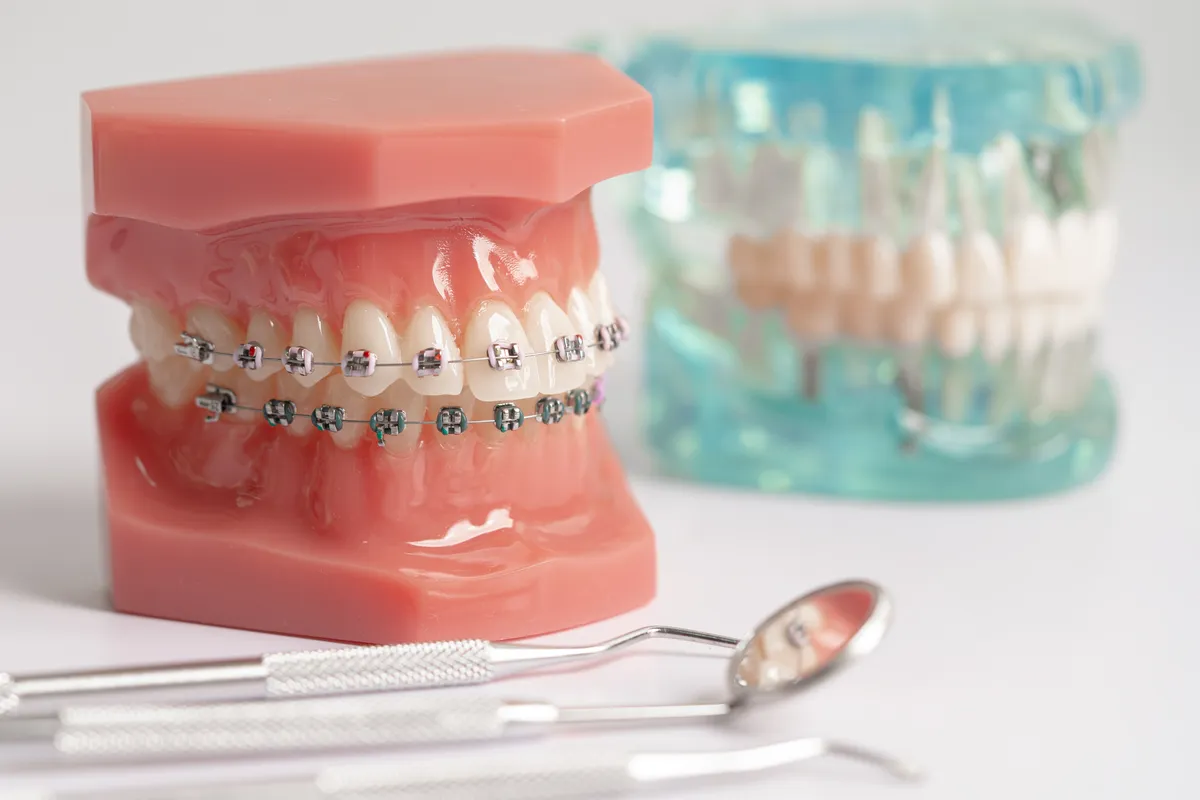
03 / The bracket-design option Orthodontic tools beside a teeth model illustrating orthodontic planning

Fastbraces

Fastbraces use a differently shaped bracket and a specially designed archwire, intended to move the crown and root of each tooth together from earlier in treatment.

For some cases this may shorten overall treatment. Whether it would in yours, and by how much, can only be answered after an assessment.

Different bracket design Case-dependent timeline Assessed at consultation

The right system depends on the position of your teeth, your bite, your budget and how much visibility matters to you. We'll go through the realistic options for your mouth at a consultation. Results, timelines and suitability vary between individuals. Prefer something removable? Compare clear aligners instead →

Step by step

What does treatment with braces involve?

Whichever system suits you, the path looks much the same. According to healthdirect, straightening teeth can take 18 months or more, and routine appointments may be every 4 to 12 weeks once treatment begins (page reviewed November 2024). Our Gisborne Road clinic has onsite parking and is open Monday to Saturday, which makes those visits easier to fit around school and work.

01

Consultation & assessment

We check your crowding, spacing and bite, make sure your teeth and gums are healthy enough to start, and take scans or impressions.

02

Fitting your brackets

Brackets are bonded to each tooth and joined with the archwire. You'll leave with care instructions and a list of foods to go easy on.

03

Regular adjustments

At scheduled visits we adjust the wire and change the elastic bands, moving your teeth further along the plan.

04

Progress reviews

Each visit is a chance to check your teeth are tracking to plan. If a bracket comes loose between visits, call the clinic and we'll help with the next step.

05

Removal & retention

When treatment is complete the brackets come off, your teeth get a thorough clean, and a retainer helps hold them in their new position.

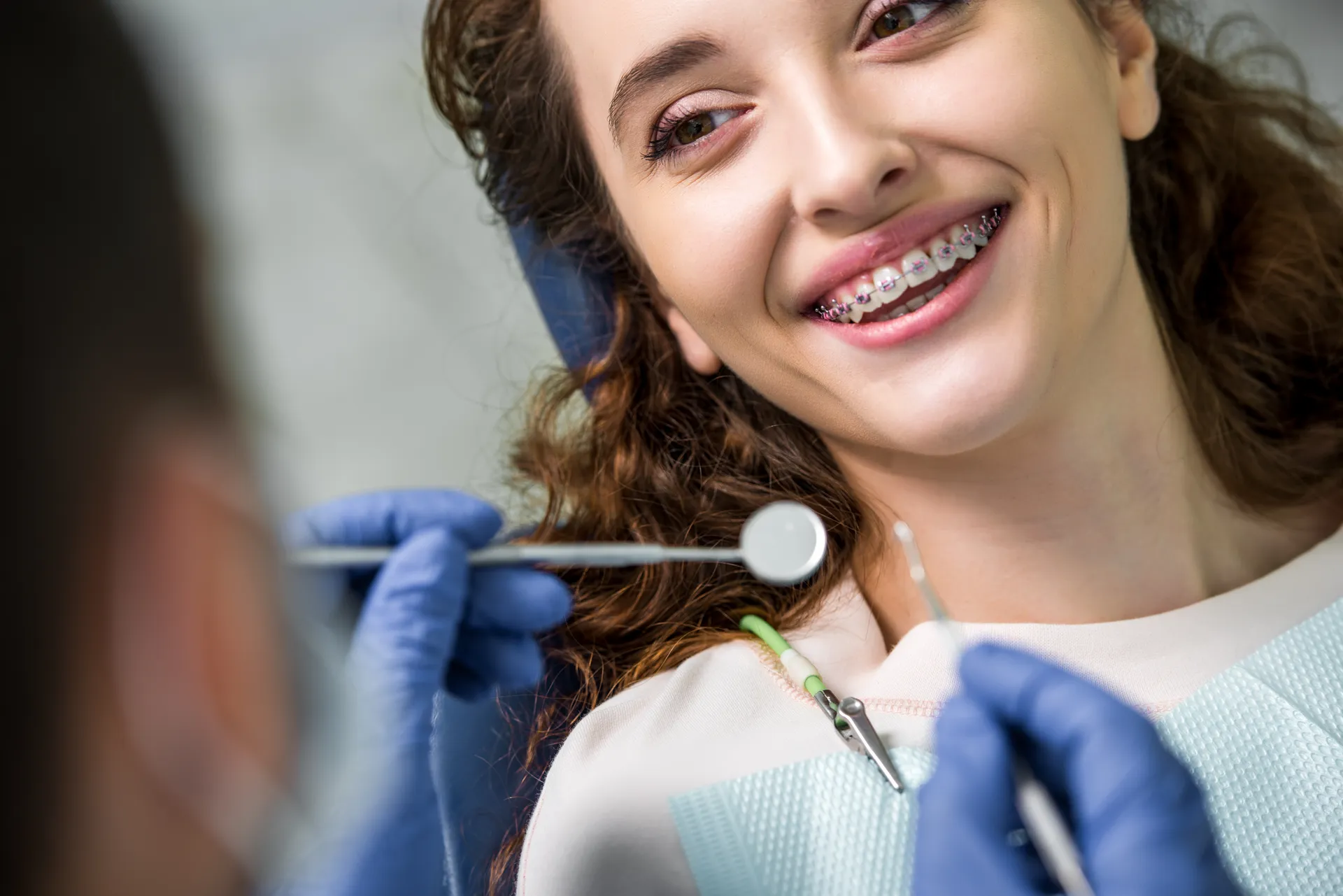
A cheerful woman with braces during a dental examination
If it's your child you're thinking about

Sometimes the first step isn't braces at all.

Many Bacchus Marsh parents assume braces are the only answer to a child's crowding or bite. While your child is still growing, there may be an earlier option worth discussing first.

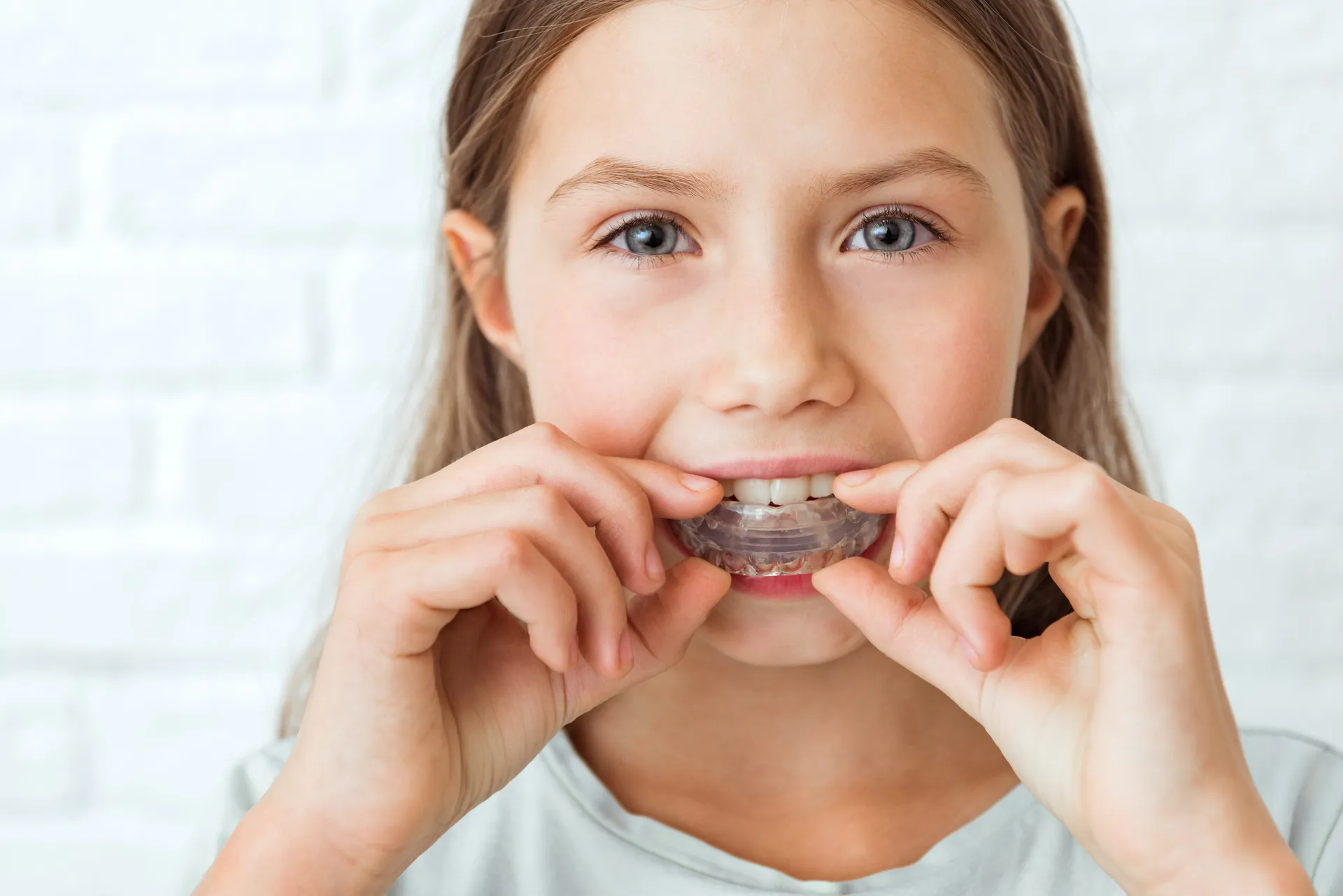
A myofunctional appliance such as Myobrace is a removable device worn for 1–2 hours during the day and overnight, together with daily exercises. The exercises teach children to keep their lips together, breathe through the nose and swallow properly, aiming to support natural jaw development while adult teeth come through.

It isn't a replacement for braces in every case, and it doesn't suit every child. For the right child it may reduce the need for more extensive treatment later. Consistent daily wear and the exercises are what make it work, so we talk that through with you and your child first.

Signs worth asking us about:

  • Breathing through the mouth rather than the nose, especially while asleep.
  • Crowding already visible before all the adult teeth have come through.
  • A thumb-sucking, tongue-thrusting or unusual swallowing habit.
  • A narrow upper jaw, or an overbite, underbite or crossbite you've noticed yourself.

This is a suitability conversation, not a sales pitch. For many children the honest answer is "let's keep an eye on it", and an assessment is the only way to know whether early treatment suits your child. Outcomes and suitability vary between individuals.

A young girl wearing a clear dental appliance A calm, unhurried first conversation
A clarifying question, not a sales pitch

Are braces the right option for you?

Braces suit many cases well, and they aren't the only sensible option for everyone. Here's an honest starting point; the rest gets worked out at your consultation.

Braces tend to suit you if…

  • Your case involves more than mild crowding, such as an overbite, underbite, crossbite or larger gaps.
  • You'd rather not rely on remembering to wear a removable device most of the day.
  • You're comfortable with regular adjustment visits over the course of treatment.
  • Your teeth and gums are otherwise healthy.

They might not be the first option if…

  • Your crowding or spacing is mild to moderate and you'd strongly prefer something removable.
  • Your child is still growing and a myofunctional appliance may be the better first step.
  • Visibility is your biggest concern and you haven't yet compared ceramic braces or clear aligners.

Curious about clear aligners instead? Compare Invisalign & other aligner systems → · Thinking about your child? Explore Myobrace myofunctional therapy →

Making it manageable

How much do braces cost?

Braces at Magical Smiles Bacchus Marsh start from $4,500 per arch for metal, ceramic or Fastbraces. Your final cost depends on how complex your case is, how long treatment runs, how many adjustment visits are involved and whether anything is needed first, such as an extraction. You'll get a detailed written quote before treatment starts, and we can provide an itemised plan to check with your health fund. For children, the Child Dental Benefits Schedule won't help with the braces themselves: Services Australia lists orthodontic dental work among the services it doesn't cover (page updated 1 January 2026). Eligible children can still claim up to $1,158 over two calendar years (or $1,132 if their two-year period began in 2025) for basic care such as check-ups, X-rays and fillings.

See the numbers before you say yes.

Curious what metal, ceramic or Fastbraces might cost on a repayment plan? Open the repayment estimator →

Estimate only — not a quote or credit approval. Your actual cost is confirmed at consultation.

We accept

About the estimator: it gives an indicative figure based on typical per-arch pricing and is not a quote. Your exact cost depends on your case and the system you choose, and you'll receive it in writing after your assessment. Repayment figures are illustrative and use Humm/NDP's own plan-fee formula for the term selected, so Humm's fees are already included. Finance depends on Humm's own eligibility criteria and approval.

A calm place to start

Matched to your mouth — and your child's.

Three systems, one honest conversation

We offer metal, ceramic and Fastbraces in Bacchus Marsh, so we can recommend the one that suits your case rather than the only one on the shelf.

Children assessed on their own terms

We look at growth patterns and tell you whether treatment should start now or wait. Early intervention is suggested only when it suits your child.

Retention planned from the start

A retainer plan is part of every course of treatment, with follow-up check-ups to catch any shifting early after the brackets come off.

Good questions

What people ask about braces.

Magical Smiles Bacchus Marsh offers traditional metal braces, clear ceramic braces and Fastbraces. All three use brackets bonded to the teeth and joined by an archwire. They differ in visibility, bracket material and, for Fastbraces, bracket and wire design, and we help you choose at a consultation.
Braces at Magical Smiles Bacchus Marsh start from $4,500 per arch for metal, ceramic or Fastbraces. The final cost depends on how complex your case is and how long treatment runs, and you receive a detailed written quote after your assessment and before treatment starts.
Yes. Children and adults can keep playing sport with braces, but a custom-fitted mouthguard is important, especially for contact sports. It protects both the braces and the mouth, and we can advise on the right mouthguard for your sport and treatment plan.
The Child Dental Benefits Schedule does not cover orthodontic treatment, so braces cannot be claimed under it. Many private health funds offer some orthodontic cover depending on your policy, waiting periods and limits. We can give you an itemised plan to check with your fund.
Around age seven is a common time for a first orthodontic check, when a mix of baby and adult teeth makes developing crowding or bite problems easier to spot. Not every child needs early treatment. We assess growth and habits and tell you whether to start now or wait.
Hard foods, sticky sweets and chewy items can damage brackets and wires and may mean an extra visit to fix them. We give you a list of foods to limit when your braces are fitted. Careful brushing and daily flossing around the brackets also help protect your teeth and gums during treatment.

Not sure which option fits — yours or your child's?

A short consultation is usually enough to tell whether metal, ceramic or Fastbraces makes sense for you, or whether an early appliance is worth exploring for your child. Want to ask a few questions first? Give the clinic a call.

Book a consultation (03) 8001 7008

Bacchus Marsh Clinic

Address83 Gisborne Road, Bacchus Marsh VIC 3340
HoursMon – Sat · 9:00 AM – 5:00 PM
Get directions

Information on this page is general in nature. Treatment outcomes, fit, timeline and comfort vary between individuals, and an assessment of your teeth (or your child's) comes before any recommendation or decision.

When you're ready

Let's work out which braces fit.

A consultation in Bacchus Marsh is usually enough to tell whether metal, ceramic or Fastbraces suits your teeth — or whether an early appliance is worth exploring for your child — with a written quote before you decide anything.

Bacchus Marsh · 83 Gisborne Road VIC 3340 · info@bacchusmarshdental.com.au
Information on this page is general in nature and is not a substitute for individual advice from your dentist. Treatment outcomes and timelines vary between individuals.