
Peri-implantitis care in Bacchus Marsh, because implants need looking after too.
An implant can't get decay, but the gum and bone around it still need care. Peri-implantitis, which is inflammation around an implant, is usually picked up early at routine reviews, before you'd notice it day to day. Here's what it is, and how we manage it at our Bacchus Marsh clinic if it's ever found.
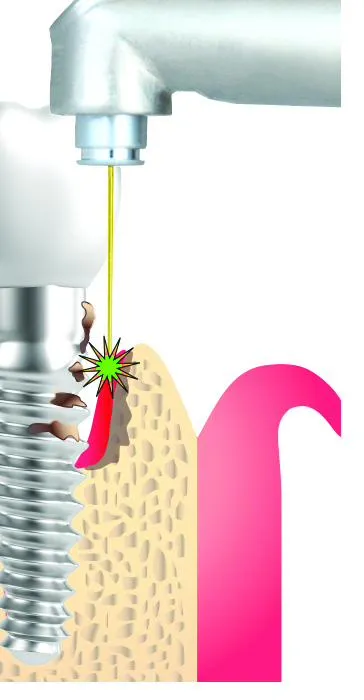
Often picked up at a routine review
What is peri-implantitis?
Peri-implantitis is inflammation or infection in the gum and bone around a dental implant, similar to gum disease around a natural tooth. It's usually found at regular reviews and with imaging. Treatment can include laser-assisted cleaning of the implant surface, which is available at our Bacchus Marsh clinic.
An implant itself doesn't decay, but the tissue around it can still become inflamed. The aim is to find it early, while it's still small, which is why regular reviews matter. Gum inflammation is common in general: in the AIHW's report on the 2017–18 National Study of Adult Oral Health, 29% of adults aged 15 and over had gingivitis and 30.1% had periodontitis, its more advanced stage. Moderate or severe periodontitis affected 51% of those aged 55–74.
Around implants specifically, a 2015 systematic review of 15 articles describing 11 studies estimated a weighted mean prevalence of 43% for peri-implant mucositis, which is inflammation of the gum around an implant, and 22% for peri-implantitis, which adds progressive loss of the supporting bone. Reported rates ranged from 19–65% and 1–47% because studies defined the two conditions differently, and the review found peri-implantitis became more common the longer implants had been in function. Those are pooled averages, not a forecast for any one person. A consensus report from the same year found that people with mucositis who did not have regular supportive care were at higher risk of developing peri-implantitis, and that bleeding on probing is the key clinical sign that separates a healthy implant from an inflamed one. It is one reason regular reviews matter.
If we find it, treatment can include laser-assisted cleaning of the implant surface, along with a check of your home care and bite. Our article on dental implant complications and how they're handled covers the wider picture.
Every implant is checked on its own.
However many implants you have, each one is reviewed separately at your check-ups. Inflammation around one doesn't mean the others are affected.
A single implant
- —Regular reviews check the implant is settled and comfortable.
- —Early signs of peri-implantitis are usually found before you'd notice them.
- —We check your home care and bite as well as the implant.
Several implants or an implant bridge
- —Each implant is checked separately, because one can be affected while the others are fine.
- —An implant bridge is checked at every implant that supports it.
- —Anything we find is treated on that implant, where appropriate.
A full-arch prosthetic
- —A fixed arch or implant-retained denture relies on every implant holding it.
- —Cleaning under a fixed arch is different from cleaning natural teeth, and we'll show you how.
- —Each supporting implant is checked at every review.
With good home care and regular reviews, implants can function for many years, although this varies between people depending on bone health, gum care and general health.
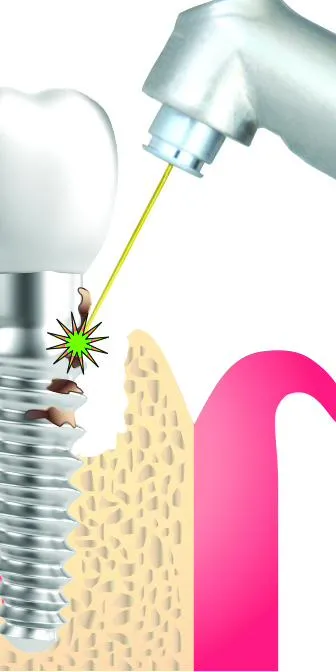
Every implant checked separately
How peri-implantitis is managed.
If we find peri-implantitis around an implant, treatment can include laser-assisted cleaning of the affected surface, along with a review of your home care and bite. The aim is to deal with it early, while it's still small.
Laser-assisted peri-implantitis treatment is available at our Bacchus Marsh clinic. Read the peri-implantitis laser page →
For the habits that help between visits, our dental implant aftercare guide has more detail.
The right approach for you is confirmed at a review appointment. Outcomes and timelines vary between individuals.
Looking after an implant, day to day.
Most implant aftercare is simple daily habit, much like caring for natural teeth, with a few implant-specific points.
Clean around the implant daily
Brush and clean between your teeth as you would around natural teeth. For a fixed arch or bridge, we'll show you how to clean underneath it.
Keep your review appointments
Regular reviews help us find early signs of peri-implantitis before they progress.
Tell us about changes early
Bleeding, tenderness or a change in how the implant feels is worth a call to the clinic on (03) 8001 7008 rather than waiting.
General guidance only. Your dentist will tailor home-care advice to your implant, your prosthetic and your gums at your review.
What reviews and care cost.
Routine reviews are part of normal ongoing care, and your implants are checked at your regular check-ups. As at September 2026, a standard check-up, scale and clean at our clinic typically ranges between $180 and $280, depending on your needs and any X-rays. If you need treatment for peri-implantitis, you'll get the cost in writing before it starts, once we've assessed the implant involved. Payment plans can spread the cost into smaller, regular amounts if you need them.
Repayment figures from the estimator are illustrative and use Humm/NDP's own plan-fee formula for the term selected, so Humm's fees are already included. Finance depends on Humm's own eligibility criteria and approval, which may not be granted.
Curious what a treatment plan might cost week to week? Open the repayment estimator → →
Estimate only. It is not a quote or credit approval. Your actual cost is confirmed at consultation.
We accept






Peri-implantitis questions, answered.
Book an implant review.
Whether it's time for a routine review or something has caught your attention, a short appointment at our Bacchus Marsh clinic is usually enough to see where things stand and what, if anything, needs doing next.
Peri-implantitis care is part of the dental implants pathway — the full-arch All-on-X implant dentures page and the bone grafting preparation step cover the related parts of the plan.