The gum around the implant bleeds when you brush.
Bleeding on probing is the earliest sign of peri-implant inflammation. It often means peri-implant mucositis — the reversible stage — and is the best time to act.

Maybe it bleeds a little when you floss. Maybe it looks puffier than the other side. Maybe a recent X-ray showed something at the implant that wasn't there before. Peri-implant disease is a common reason implants run into trouble years after placement, and the earlier it's caught, the more we can do. At Magical Smiles Bacchus Marsh we use the Fotona LightWalker's combined Er:YAG and Nd:YAG protocol, a well-studied laser approach to the surface where bacteria, titanium and gum meet.
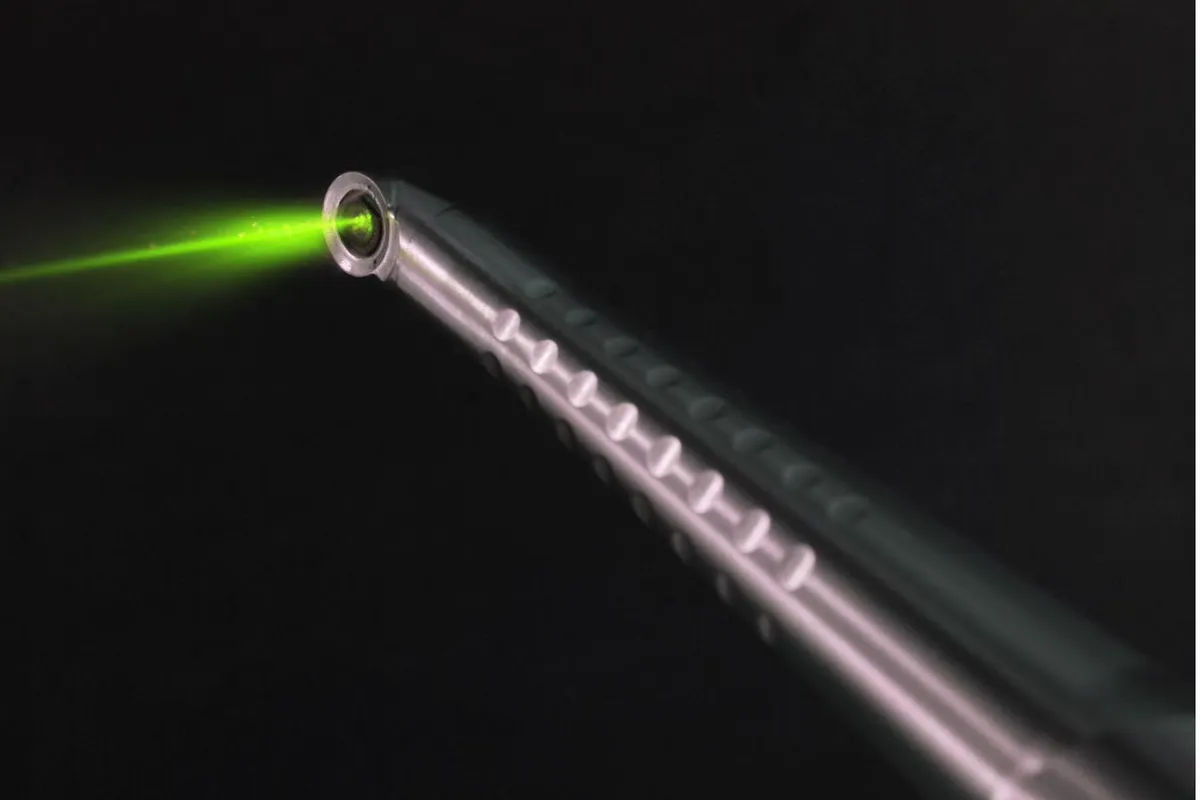 Er:YAG · 2940 nm
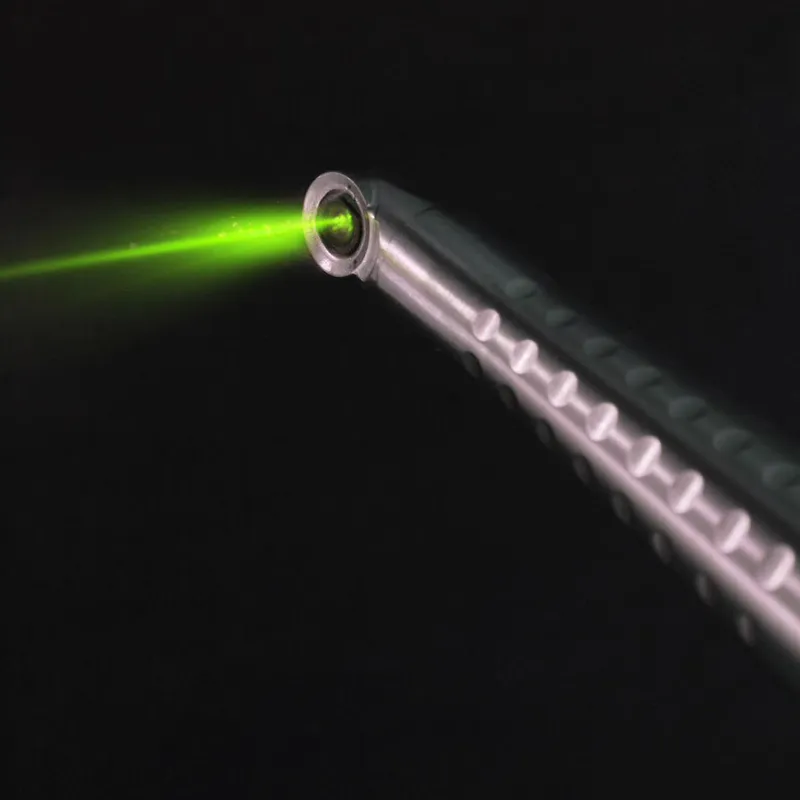 Nd:YAG · 1064 nm
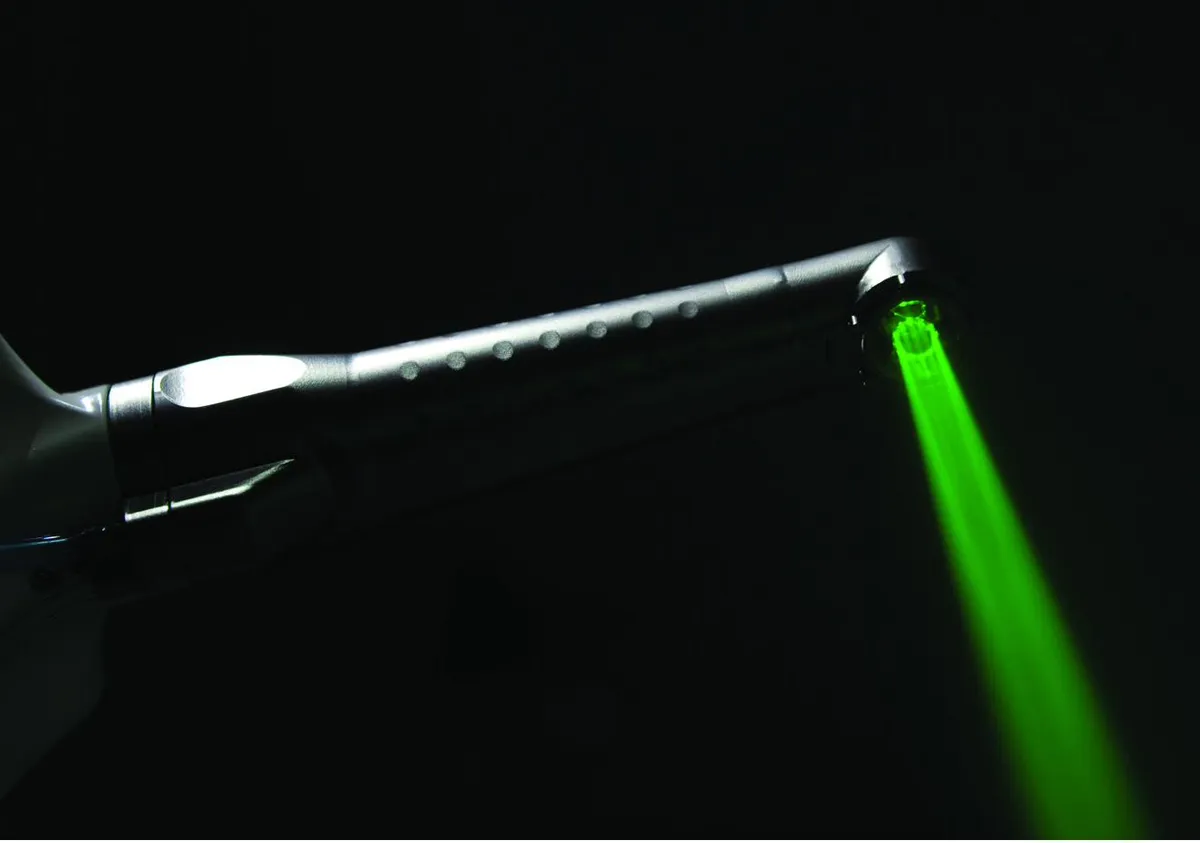 Dual-wavelength
An implant is a remarkable thing. A titanium post slowly accepted into your jawbone, holding a crown that chews and speaks and smiles like the tooth it replaced. For most patients, most of the time, it just works — sometimes for the rest of their life.
Sometimes it doesn't. The gum around it becomes inflamed. Bacterial biofilm — the same kind that causes gum disease around natural teeth — colonises the surface of the implant. Left unchecked, it begins to break down the supporting bone. It is not rare, and the earlier we step in, the more we can do. A systematic review of 57 studies (accepted 4 October 2022) put peri-implantitis at 19.53% of patients and 12.53% of implants, though the figure moves a lot with how the condition is defined. A 2025 meta-analysis using the 2017 World Workshop criteria (first published 14 June 2025) found peri-implant mucositis in 63.0% of patients and peri-implantitis in 25.0% of patients and 18.0% of implants; among non-smokers, implant-level peri-implantitis was 5.2%. The Better Health Channel (reviewed 12 December 2025) adds that it is more difficult to clean around an implant than a natural tooth, and that gum disease around an implant can be very difficult to treat.
Laser-assisted treatment matters here because the implant surface is engineered to encourage bone — the same micro-texture that makes it nearly impossible to scrape clean with conventional instruments. The Er:YAG wavelength removes inflamed tissue and biofilm without damaging titanium. The Nd:YAG wavelength disinfects more deeply. The goal is to halt the disease, settle the inflammation and stabilise the implant where it is. We will be honest with you about what is and isn't achievable for your case. This is part of our laser dentistry range; the same platform also covers laser gum depigmentation.
Most peri-implant disease is found early, by people who notice a small change and choose to investigate it. If any of these sound familiar, it's worth booking an assessment — even if you've been told before that everything looks fine.
Bleeding on probing is the earliest sign of peri-implant inflammation. It often means peri-implant mucositis — the reversible stage — and is the best time to act.
Subtle swelling, redness, or a gum that doesn't sit as tight to the implant crown as it once did. The tissue is telling you something is changing underneath.
Sometimes peri-implantitis is found at a routine review before you've noticed any symptoms. Catching it on imaging is often the earliest possible warning we have.
An unpleasant taste that won't shift, or a tiny amount of pus when you press on the gum, suggests established infection and warrants a prompt assessment.
A change in how the implant sits under pressure — tenderness, a sensation of mild movement, food packing where it didn't before — is worth investigating without delay.
Implants need the same ongoing maintenance as natural teeth. If it's been a while since your last review, a baseline assessment is the place to start — regardless of whether you're noticing anything.
Peri-implantitis is not a problem you can solve with a stronger antiseptic mouthwash. The bacterial biofilm sits inside the engineered micro-texture of the implant surface — the same texture that helps the implant integrate with bone. Cleaning it without damaging it is the technical challenge. The Fotona LightWalker's dual wavelengths are matched to two different parts of that job.
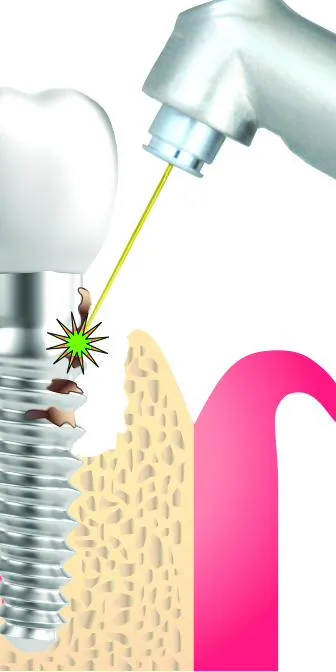 Er:YAG + Nd:YAG
Metal curettes scratch titanium. Ultrasonic tips struggle to follow the contour of the implant threads. Even plastic instruments leave biofilm behind in the micro-grooves of the surface. This is why peri-implantitis has historically been so hard to manage — the very feature that made the implant successful is what now shelters the bacteria.
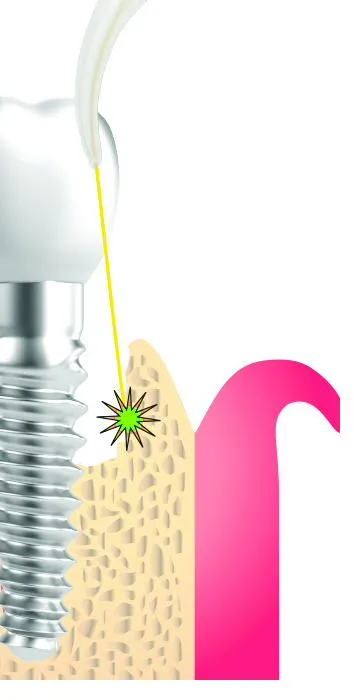
The Er:YAG wavelength (2940 nm) is strongly absorbed by water. It vaporises the water in inflamed soft tissue and bacterial biofilm but does not heat or damage titanium. It can be used to remove granulation tissue from a peri-implant bone defect, clean the implant surface itself, and gently freshen the surrounding bone — all without the mechanical contact that risks scratching the implant.
The Nd:YAG wavelength (1064 nm) penetrates further into soft tissue and is well-documented for its bactericidal effect within periodontal and peri-implant pockets. After the Er:YAG step has removed the bulk of inflamed tissue and biofilm, the Nd:YAG step deeply disinfects the pocket and the adjacent tissues — reducing the bacterial load that drives the disease.
The combined protocol is designed to halt the active disease, settle the inflammation and create the most favourable possible conditions for the surrounding tissues to stabilise. It is not a regenerative procedure. Bone that has already been lost does not reliably return. Where significant defects exist, regenerative grafting may be discussed as a separate, additional step. We are open about the boundary between what the laser can do and what it can't.
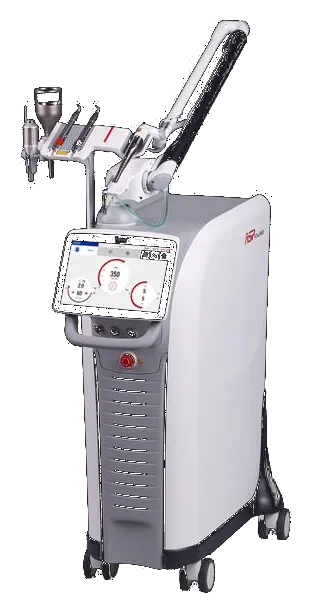 Fotona LightWalker
The Fotona LightWalker combines an Er:YAG and an Nd:YAG source in a single unit, which is what the combined peri-implant protocol needs: one wavelength for the implant surface, one for the surrounding tissue.
At our Bacchus Marsh clinic the unit is operated by a dentist who has completed training in dental laser use. Each step of the protocol uses tightly calibrated power, pulse duration and pulse frequency, displayed on the unit's touchscreen throughout. Laser-rated eye protection is provided for you, the dentist and the assistant.
For the avoidance of doubt: peri-implant disease is a serious clinical condition. Advanced cases might need more intensive procedures or a referral, which our laser-trained general dentists will discuss with you at the assessment. The published evidence also calls for care with claims: a 2025 review (accepted 31 August 2025) reports that peri-implantitis prevalence is highly variable, from 10% to more than 40% depending on diagnostic criteria, patient population and length of follow-up, and that mechanical debridement, antiseptics, local antibiotics and laser therapy provided limited benefit in early disease, with surgical procedures typically needed for extensive lesions and bone loss.
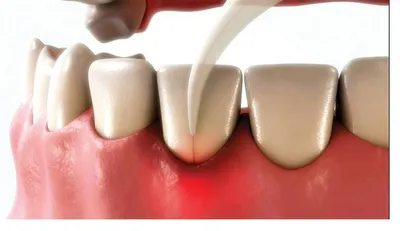
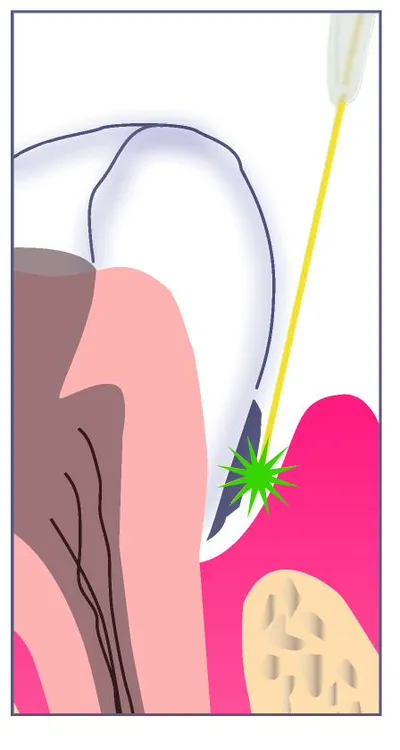
Peri-implant disease is a chronic condition. The treatment is structured across multiple visits — and the maintenance afterwards matters as much as the treatment itself.
Periodontal charting around the implant, bleeding on probing, photographs, and a small targeted X-ray to establish current bone levels. The data is the starting point.
Mucositis or established peri-implantitis? How much bone has been lost? What's the most likely cause? We explain what we've found.
The recommended protocol, the number of visits, what each visit will involve, the maintenance schedule afterwards, the fees, and a realistic outcome range — all set out before you commit.
Local anaesthetic is used as needed for comfort. The area is isolated and a thorough mechanical clean is performed where the implant surface allows.
The Er:YAG handpiece is used to vaporise inflamed granulation tissue and biofilm from the implant surface, the pocket and the adjacent bone defect.
The Nd:YAG handpiece is used to deeply disinfect the peri-implant pocket and the surrounding tissues — reducing the bacterial reservoir that drives the disease.
Aftercare advice, interdental cleaning technique, products specific to the implant area, and an honest conversation about what daily routine the implant now needs.
Review visits across the first year, then a long-term maintenance schedule at our Bacchus Marsh clinic. Peri-implant disease is managed over time, not fixed once.
There's no single agreed-upon protocol for peri-implantitis — research is ongoing, and individual cases differ. The honest comparison below is what we usually walk through at the assessment.
Peri-implant disease is a slow, often quiet condition. What matters most isn't a piece of equipment: it's being taken seriously, being told the truth and getting a plan you can actually follow.
Both Er:YAG and Nd:YAG used together, on the platform the protocol was developed for. The combination is what makes the approach distinctive — not either wavelength alone.
We will tell you whether your implant has mucositis or established peri-implantitis, how much bone has been lost, and what we realistically think the treatment will achieve. No softening of the facts.
Advanced cases might need more intensive procedures or a referral, and your dentist will discuss that with you at the assessment. We don't keep cases beyond what we can do well.
The treatment visit matters, but the structured supportive care that follows is what determines the long-term outcome. We build a maintenance schedule that fits your life, not the other way around.
Probing depths, bleeding scores, photographs, X-rays — recorded, dated and explained. You can see the change visit-by-visit, and so can any other practitioner you ever see for it.
We manage peri-implant disease around implants placed at any practice, using any system, in any country. We don't ask whose implant it was — we just need to help you keep it.
Most people arrive with a mix of worry, frustration and uncertainty. These are the questions that come up again and again at our Bacchus Marsh clinic. If yours isn't here, call (03) 8001 7008 or raise it at the assessment.
Peri-implantitis is inflammation around a dental implant that has progressed to involve loss of the supporting bone. Its earlier, reversible stage — inflammation of the gum tissue around the implant without bone loss — is called peri-implant mucositis.
Both are driven by bacterial biofilm accumulating on the implant surface, often combined with risk factors like smoking, uncontrolled diabetes, or excessive bite forces on the implant. The distinction between mucositis and peri-implantitis matters because the management approach and the prognosis differ. The earlier we catch and address inflammation, the more we can do about it.
The early signs are often subtle: gum around the implant that bleeds when you brush or floss, mild swelling or redness, occasional tenderness, or a change in how the gum looks compared with your other teeth.
As things progress you might notice a small amount of pus, persistent bad taste, deepening of the gum pocket around the implant, or — in late stages — the implant feeling different to bite on. Many cases are first picked up on a routine X-ray before there are noticeable symptoms. A clinical examination and a small targeted X-ray are how we confirm what's happening underneath.
An implant surface is engineered to encourage bone to grow into it — that same texture makes it very hard to clean once bacterial biofilm has colonised it.
Traditional metal instruments scratch titanium. Plastic instruments are limited by their geometry. Ultrasonic tips struggle to follow the threads of the implant. The Er:YAG wavelength is effective at removing soft tissue and biofilm from titanium without harming the surface. The Nd:YAG wavelength then penetrates further to disinfect the surrounding tissues. Used together, the combination is a well-studied approach to cleaning implant surfaces.
The goal of treatment is to halt the disease process, settle the inflammation, and give the surrounding tissues the best chance of stabilising at their current level.
The outcome depends on how much bone has already been lost, the location of the implant, your general health, smoking status, control of any underlying conditions like diabetes, and how consistently you can maintain the area afterwards. Lost bone does not reliably regenerate. We will give you an honest, individualised read on what we think is achievable at your assessment, and we will not over-promise. Where the case is too advanced for a predictable outcome, we will say so.
We use local anaesthetic where useful to keep you comfortable throughout the appointment. In early-to-moderate cases the inflamed tissue can often be treated without opening the gum surgically, which many people find easier to go through.
Some tenderness for a day or two afterwards is normal and is usually well-managed with simple analgesics. We'll give you clear aftercare instructions, including what to look out for and when to call us.
Plan for at least an initial assessment visit, one to two treatment visits depending on the severity of the case, and a structured series of review appointments across the first year.
Peri-implant disease is a chronic condition that requires ongoing maintenance, not a one-off fix. After the first year of structured reviews, we move you onto an individualised long-term supportive maintenance schedule. We will explain the full plan after the assessment so you know what to expect.
Sometimes the most honest assessment is that an implant has lost too much supporting bone — or is mobile — and trying to treat it would only delay an outcome that is going to happen anyway. In that case we will say so plainly.
We'll talk you through what removal would involve, the healing period that follows, and whether replacement is realistic — either with a new implant after a period of healing and any necessary grafting, or with an alternative restoration such as a bridge or partial denture. The decision is always yours, and we will support whichever path you choose.
Ongoing professional maintenance is the single most important factor. We typically recommend a structured peri-implant cleaning visit every three to four months in the first year after treatment, then individualised based on how the area is responding.
Daily home care around the implant is the other half — we'll teach you the technique and the products that work for your specific implant. Controlling risk factors like smoking, uncontrolled diabetes and excessive grinding, along with addressing any bite forces falling on the implant, are also part of a complete plan. Most recurrent peri-implant disease comes down to maintenance falling away, so the plan we build with you is one you can actually follow.
Not at all. We manage peri-implant disease around implants placed at any practice — including older systems, implants placed elsewhere in Australia, and implants placed overseas.
We will ask for any records or imaging you can provide, but if you don't have them, we'll take new baseline records as part of the assessment. There is no judgement and no preference for our own work — what matters is helping you keep the implant you've got.
Yes — laser-assisted peri-implantitis care is offered at Magical Smiles Bacchus Marsh, 83 Gisborne Road, Monday to Saturday, 9am to 5pm. Call (03) 8001 7008 or book online.
Our team helps with the appointment, any records transfer from the practice that placed your implant, and the long-term review schedule afterwards. The same dentist will usually see you across the treatment and review visits.
Laser-assisted peri-implantitis care is offered at Magical Smiles Bacchus Marsh, 83 Gisborne Road, Monday to Saturday, 9am to 5pm. Here's how to book, what to bring and how paying works.
83 Gisborne Rd · Maddingley · Darley
Any practice · any system
HICAPS · Afterpay · Zip · humm
The Fotona LightWalker is used across a range of treatments — each tuned to a different tissue and a different clinical goal.
If something around your implant has changed — even subtly — the assessment is where we work out what it is and what to do about it. Earlier care usually leaves more options open. No pressure to commit to anything at the consultation; we'd just rather know now than later.