✦ Now welcoming new patients  ·  Same-day emergency appointments where possible  ·  Afterpay, SuperCare & all major health fundsBacchus Marsh · (03) 8001 7008
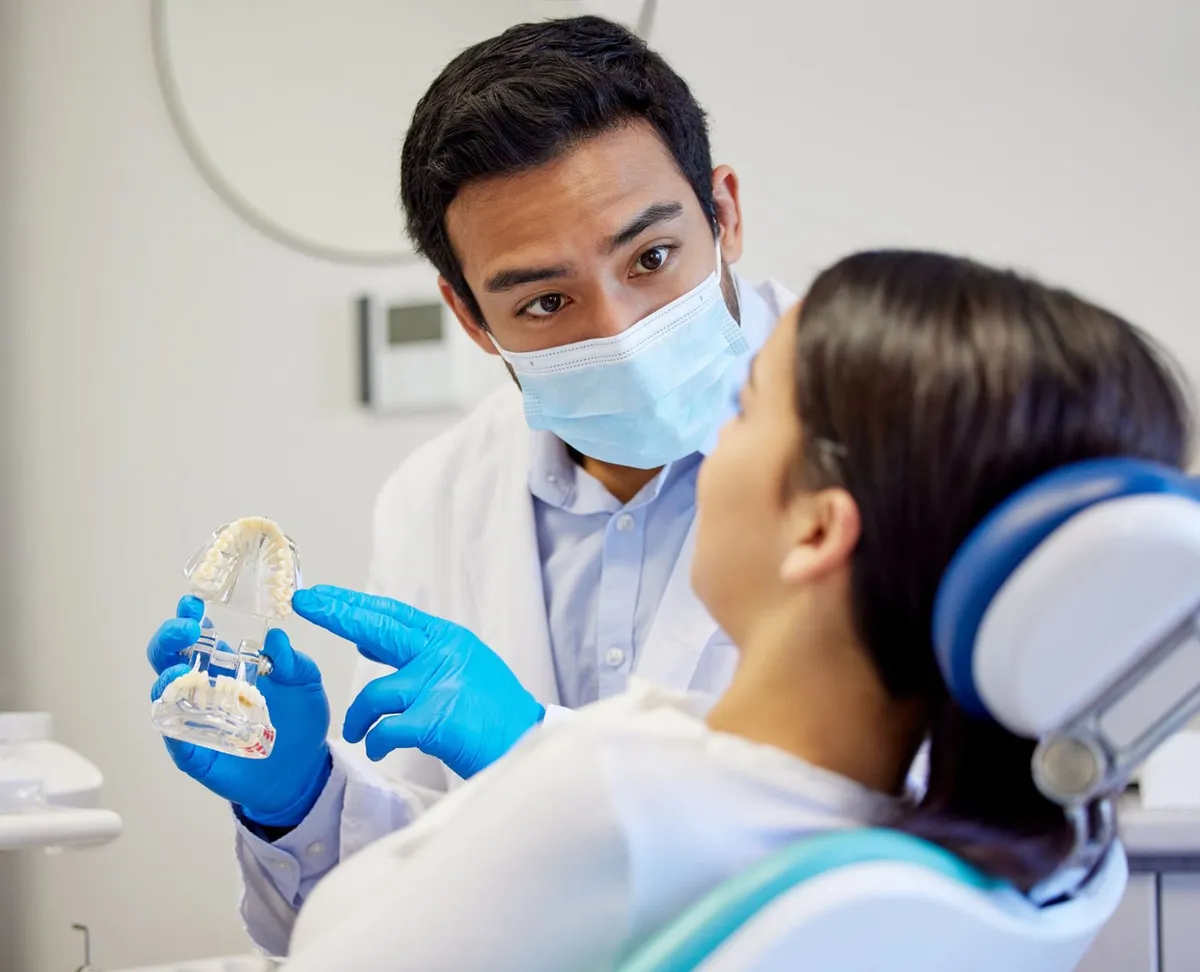
A Magical Smiles dentist gently showing a young patient a model of teeth
Tooth extractions · Bacchus Marsh

Tooth extractions in Bacchus Marsh, only when a tooth can't be saved.

A tooth extraction is the removal of a tooth from its socket in the jaw. If a tooth is hurting, broken or badly decayed, our Bacchus Marsh dentists will examine it, explain whether it can be saved, and talk through every option calmly before anything is removed.

A Magical Smiles dentist talking with a patient in the treatment chair
The basics

What having a tooth out involves.

Having a tooth removed sounds daunting, but it is one of the most common dental procedures. The area is numbed with local anaesthetic first, so you feel pressure and movement rather than sharp pain.

A tooth may need to come out because of deep decay or infection that a filling or root canal treatment can't fix, advanced gum disease that has loosened it, a break below the gumline, an impacted wisdom tooth, crowding before orthodontic treatment, or a baby tooth that is blocking the adult tooth. Whatever the reason, the aim is to relieve the problem and protect the rest of your mouth.

There are two main types of extraction, and which one you need depends on the tooth. Here's the difference.

Two kinds of extraction

Simple or surgical: what's the difference?

It depends on where the tooth sits, how much of it is above the gum and the shape of its roots. Your dentist will tell you which type you need, and why, before starting.

Extractions are part of our everyday general dentistry in Bacchus Marsh, alongside the routine care that keeps the rest of your mouth healthy.

Simple / General

Simple extraction

For a tooth that is fully visible above the gum and easy to reach.

This is the most common type. Once the area is numb, the dentist uses special instruments to gently loosen the tooth from the bone and ligament around it, then lifts it out. Gauze is placed over the socket and you bite down gently to help a clot form.

  • Local anaesthetic: you're awake, but the area is numb.
  • Usually done in one fairly short visit.
  • Normally no cut to the gum and no stitches.
  • Common for badly decayed or loose teeth above the gum.

Surgical

Surgical extraction

For a tooth that can't be removed the simple way.

Some teeth need more care, such as a tooth broken off at the gumline, an impacted wisdom tooth stuck under the gum or bone, or a tooth with curved or fragile roots. The dentist may make a small opening in the gum and sometimes divide the tooth into pieces so each part can be removed gently.

  • May involve a small cut in the gum and sometimes stitches.
  • Often used for impacted wisdom teeth or teeth broken below the gum.
  • Healing happens in stages, with clear aftercare instructions.
  • Planned with X-rays so you know what to expect.

Please note: Any surgical or invasive procedure carries risks. Before proceeding, you should seek a second opinion from an appropriately qualified health practitioner.

In pain right now?

What happens at an urgent toothache visit.

When a tooth is throbbing, everything feels urgent, and it's common: around 1 in 5 Australian adults (19%) had toothache in the previous 12 months in 2021 survey data reported by the Australian Institute of Health and Welfare (report updated August 2026). Knowing what will happen when you arrive at our Gisborne Road clinic, open Monday to Saturday from 9:00 am to 5:00 pm, can take some of the stress away.

An adult holding their cheek, experiencing tooth pain
01

It starts with an examination

The dentist listens to what has been happening and examines the tooth. Nothing is done until you understand the problem and your options.

02

X-rays when needed

Much of a tooth is hidden below the gum. An X-ray shows the roots, any infection at their tips, the bone around them and where nerves sit, so the dentist can judge whether the tooth can be saved and plan the safest way to remove it if not.

03

Often treated at the same visit

Where it is safe and appropriate, the dentist can usually treat the problem at the same appointment, so you're not heading home to another night of pain.

04

The occasional exception

Sometimes a severe infection stops the local anaesthetic from working properly. Rather than push on, the dentist may prescribe antibiotics or pain relief and book you back in once the infection has calmed down.

Why we sometimes wait for an infection to settle

Leaving with a prescription instead of a finished treatment can feel frustrating. But a badly infected area becomes more acidic, and local anaesthetic doesn't work well in those conditions. A few days of antibiotics lets the infection settle, so the anaesthetic can work properly and the extraction can be done comfortably. It's a short wait for a much gentler experience.

After an extraction

Why the gap is worth thinking about.

Once the pain has gone it's easy to forget the gap, especially at the back where no one sees it. But teeth work together, and when one is lost the others change over time. Here is what can happen.

Diagram showing neighbouring teeth drifting and tilting into the space left by a missing tooth

Nearby teeth can tilt into the space

Teeth tend to drift towards an empty space. As they lean, small gaps open up where food gets trapped and brushing is harder.

Trapped food raises the risk of decay

Plaque and food caught in hard-to-clean spots can lead to decay and gum problems in teeth that were healthy before.

The jawbone can shrink

A tooth root keeps the bone around it active. Without it, the bone can slowly recede, which can change your bite and make replacing the tooth later more involved.

The opposite tooth can move

The tooth that used to meet the missing one has nothing to bite against, and can gradually grow further out of its socket, affecting your bite.

You may start chewing on one side

Many people start favouring the other side without noticing. That adds load to those teeth and can lead to jaw discomfort and uneven wear.

Replacement can get more complicated

These changes happen slowly, but the longer a gap is left, the more the teeth and bone around it can change, and the more involved replacement may become.

If a tooth does need to come out, we'll explain the ways to replace it, such as dental implants, bridges or dentures, and what may suit you. You don't need to decide on the day of your extraction.

Our approach

We try to keep your own tooth first.

At Magical Smiles Bacchus Marsh, removing a tooth is a last resort. A natural tooth is anchored in your jaw, responds to how you bite and helps keep the bone and gum around it healthy. Replacements can work well, but none does all of that in the same way.

So before an extraction is recommended, your dentist looks carefully at whether the tooth can be saved. Often, it can. Earlier care makes a real difference: Australia recorded close to 89,200 hospitalisations for dental conditions in 2024–25 that potentially could have been prevented with earlier treatment, according to the Australian Institute of Health and Welfare.

a

Fillings

When decay is found early, a filling can repair the tooth and stop the decay spreading.

b

Root canal treatment

When the nerve inside a tooth is infected, root canal treatment can often clear the infection and keep the tooth.

c

Crowns

A cracked or heavily filled tooth can often be protected and strengthened with a crown.

We recommend an extraction only when a tooth can't be repaired, and then we make it as calm and gentle as we can.

A young woman with a healthy, natural smile

Help with the cost.

Cost shouldn't keep you in pain, but for some people it does: in the ABS Patient Experience Survey 2024–25, a quarter of people (25%) who needed to see a dental professional delayed or skipped a visit, and 16% said cost was a reason. You'll get an itemised quote with item numbers before treatment, we accept all major health funds with HICAPS claims on the day, and payment plans are available for eligible patients.

  • All major health funds
  • Afterpay
  • National Dental Plan
  • SuperCare
Common questions

Tooth extraction questions from Bacchus Marsh patients.

The area is numbed with local anaesthetic before anything starts, and we don't begin until you're comfortable. You may feel pressure and movement, but not sharp pain. Once the anaesthetic wears off, some soreness is normal and usually eases with the pain relief your dentist recommends. If you're anxious, tell us: The Wand and sedation options such as happy gas can be discussed.
Common reasons include decay or infection too deep for a filling, crown or root canal treatment, advanced gum disease that has loosened the tooth, a break at or below the gumline, an impacted wisdom tooth, crowding before orthodontic treatment, and a baby tooth blocking the adult tooth. Your dentist will explain why removal is recommended and what the alternatives are.
A simple extraction is for a tooth that is fully visible above the gum and can be loosened and lifted out. A surgical extraction is needed when a tooth has broken at the gumline, is impacted, as some wisdom teeth are, or has roots that make simple removal difficult. It may involve a small cut in the gum, dividing the tooth into pieces, and sometimes stitches.
Every urgent visit starts with an examination, and X-rays may be taken. Where it is safe and appropriate, treatment can often go ahead at the same visit. Occasionally a severe infection stops the anaesthetic from working well, so the dentist may prescribe antibiotics or pain relief first and book you back in once the infection has settled.
Some bleeding for the first few hours is normal and eases as you bite on gauze. Numbness lasts a few hours, and swelling often peaks around day two before settling. Rest, and follow your aftercare instructions to lower the risk of dry socket or infection. If only local anaesthetic was used you can usually drive yourself home; if you had sedation, arrange for someone to drive you. Call us if pain worsens after a few days or bleeding won't stop with pressure.
Not always, but a gap can let neighbouring teeth drift, change your bite, and allow the jawbone in that area to shrink over time. Implants, bridges and dentures are the main ways to replace a tooth. We'll talk you through what may suit you, and you don't need to decide on the day.

When you're ready, here's where we start.

Whether a tooth is aching tonight or it's something you've been putting off, a consultation is a conversation. We'll look, explain what's going on and go through your options, with no pressure and no lectures.