
On this page
- Key points at a glance
- What can dental veneers fix?
- How do veneers change the look of your teeth?
- What types of dental veneers are there?
- What are the long-term benefits of veneers?
- What happens during veneer treatment?
- Are you a good candidate for veneers?
- What is the first step towards veneers?
- Thinking about veneers in Bacchus Marsh?
A smile does more than show you’re happy. It shapes how confident you feel and how you come across, and not everyone feels good about theirs. That’s where dental veneers can help.
In short: veneers are thin shells bonded to the front of your teeth that can make them look whiter, straighter and more even. There are four main types, the process runs from a consultation to bonding over a few visits, and they suit people with healthy teeth and gums who are ready to keep up good oral hygiene.
Key points at a glance
- Veneers can address discolouration, chips and gaps, among other concerns.
- Types include porcelain and composite, each with its own advantages.
- With proper care, veneers can last many years.
- The process involves a consultation, tooth preparation and custom-made veneers designed to fit closely and look natural.
- Veneers can offer a relatively quick way to change how your smile looks.
- Good candidates have healthy teeth and gums, enough enamel and a commitment to oral hygiene.
- Habits like teeth grinding affect suitability and are worth discussing with your dentist.
What can dental veneers fix?
Quite a lot, and that versatility is one of their main advantages.Dental veneers are thin shells your dentist places on the front of your teeth, and they can address several cosmetic concerns at once.
- Discoloured teeth: if teeth whitening hasn’t worked, veneers can give you a brighter smile.
- Chipped or broken teeth: veneers can cover chips or breaks so teeth look whole.
- Small gaps: they can close small spaces between teeth without braces.
- Uneven or misshapen teeth: veneers can make teeth match and give them a natural shape.
- Worn teeth: teeth that have become shorter over time can look longer and more even.
If you’re weighing up whitening first, note that under the Poisons Standard (June 2026), teeth whitening products with more than 6% hydrogen peroxide or more than 18% carbamide peroxide can only be supplied by registered dental practitioners as part of their dental practice, so the stronger options come through your dentist.
How do veneers change the look of your teeth?
By changing colour, shape, size and surface all at once. Good veneers combine art and science, and each one is custom-made for your smile.
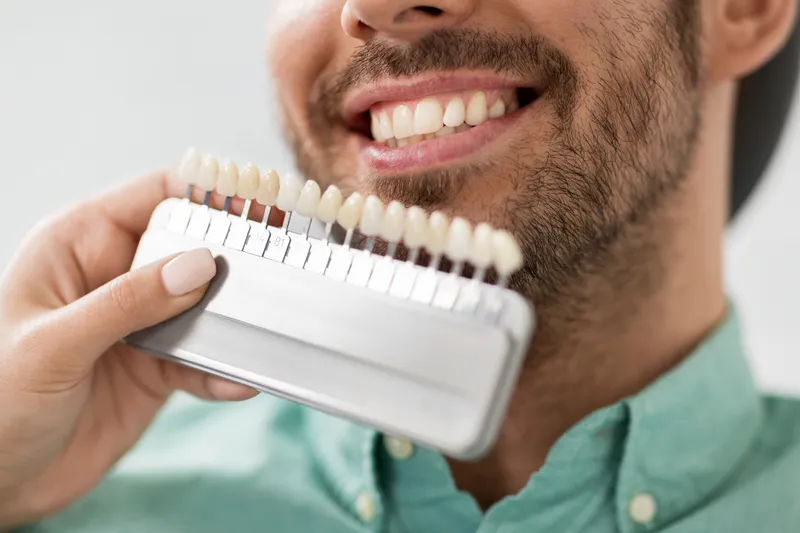
- Colour matching: veneers come in many shades, so your dentist can brighten your smile or match your other teeth.
- Alignment and shape: veneers can make teeth look straighter and more uniform without braces, and change the shape of teeth that are small or oddly shaped.
- Size and proportion: teeth that seem too short or too long can be balanced so your smile looks even.
- Surface: veneers can cover cracks, chips and rough textures for a smooth, natural finish.
- Gum balance: sometimes veneers can also help the gum line look more balanced with the teeth.
For more on how shade, light and fit are matched, see what makes veneers look natural.
What types of dental veneers are there?
There are four main types: porcelain, composite resin, Lumineers and removable veneers. Which suits you depends on your needs, your budget and the condition of your teeth.
| Type | What it is | Worth knowing |
|---|---|---|
| Porcelain veneers | Strong, translucent shells with a natural finish. | Resist stains better than natural teeth and can last many years with good care. |
| Composite resin veneers | A more affordable option that can be applied in a single visit. | Easier to repair if damaged, but may not last as long as porcelain. |
| Lumineers | A type of porcelain veneer that is much thinner. | Less of the tooth surface needs trimming to fit them. |
| Removable veneers | Also called snap-on veneers; they can be taken out and put back in. | A temporary and more affordable way to change how your smile looks. |
As at September 2026, porcelain veneers at our Bacchus Marsh clinic start from $1,700 each and composite veneers from $695 per tooth, while Snap-On Smile starts from $2,000 per arch. These are starting points, not quotes: your fee depends on your assessment. Your dentist can help you decide which option suits your teeth and goals. You can read more about porcelain veneers and Snap-On Smile, a removable option, on our service pages.
What are the long-term benefits of veneers?
Veneers are durable, easy to look after and gentle on your natural teeth, and they can make a lasting difference to how you feel about your smile.
- Durability: with adequate care, porcelain veneers can last 10 to 25 years; composite veneers usually last four to eight.
- Low maintenance: veneers need the same care as natural teeth: regular brushing, flossing and dental check-ups.
- Stain resistance: porcelain resists stains from coffee, tea and smoking.
- Gum-friendly: gums generally tolerate good-quality materials like porcelain well, which helps lower the risk of gum problems.
- Minimal impact on natural teeth: only a small amount of enamel is trimmed, preserving most of the natural tooth compared with more invasive options.
Confidence and quality of life
A smile you’re happy with goes beyond appearance. It can influence how you feel and how you engage with the people around you.
- Self-confidence: feeling good about your smile can make you more confident in social situations, job interviews and relationships.
- Social ease: a confident smile can help you come across as approachable and friendly.
- Work: confidence in your smile can carry over into how you present yourself professionally.
- Mood: being happy with your smile can lift your overall outlook.
- Less social anxiety: if concerns about your teeth make you anxious around others, an improved smile can ease that stress.
What happens during veneer treatment?
Porcelain veneer treatment usually takes a few visits, from a consultation through to bonding and a follow-up. Here’s a simple breakdown.
- Consultation: you talk through your smile goals and what you hope to achieve.
- Evaluation: your dentist checks whether veneers suit you and plans treatment. This may involve dental X-rays and impressions or digital scans, and some people need other dental treatment first.
- Minimal tooth preparation: a tiny amount of enamel, usually less than a millimetre, is trimmed from the front of the teeth to make space for the veneers.
- Impressions: this may involve digital smile design. An impression of your prepared teeth is sent to a dental laboratory, where your custom veneers are made.
- Temporary veneers: sometimes temporary veneers are placed to protect your teeth while the final ones are made.
- Fitting: your dentist checks the fit and colour, and may trim or adjust the veneers so they fit closely.
- Bonding: once you and your dentist are happy with the look, the veneers are bonded to your teeth and a special light hardens the adhesive.
- Follow-up: after a couple of weeks, your dentist checks how your gums are responding and that everything is as it should be.
Our Bacchus Marsh clinic uses digital technologies such as Digital Smile Design and CEREC, and 3D digital imaging supports planning, including digital impressions. If you’d prefer a shorter process, composite veneers can often be done in one visit.
Are you a good candidate for veneers?
You may be if your teeth and gums are healthy, you have enough enamel for the veneers to bond to, and you’re committed to caring for them. Checking suitability first is what makes a good long-term result more likely.
- Oral health: problems like gum disease or tooth decay need treating before veneers.
- Enough enamel: veneers need a certain amount of enamel to bond properly; if yours is too thin, they may not hold as well.
- Alignment: minor alignment issues are fine, but severe misalignment may need orthodontic treatment first.
- Grinding or clenching: these habits can damage veneers, so you may need a protective night guard while you sleep.
- Oral hygiene: daily brushing, flossing and regular check-ups are essential for maintaining veneers.
healthdirect (last reviewed February 2025) gives similar guidance: veneers don’t straighten your teeth or fix your bite, and they may not be suitable if you grind or clench your teeth or have gum disease.
Lifestyle considerations
Your daily habits affect both your suitability and how long veneers last, so they’re worth talking through with your dentist.
- Diet: lots of hard or sticky foods, like caramels or toffee, can damage veneers, and coffee and red wine can discolour some types over time.
- Oral habits: biting nails, chewing pens or using your teeth as tools can harm veneers.
- Sport: if you play contact sports, a mouthguard can protect your veneers.
- Smoking: smoking can stain veneers over time, and quitting is good for your overall health too.
What is the first step towards veneers?
A chat with a dental professional. They can give you personalised advice and help you work out whether veneers are right for you. It helps to know what veneers can offer going in:
- They can change the colour, shape and apparent alignment of your teeth.
- They can make a significant difference to how your smile looks in just a few dental visits.
- With proper care, they can last for many years.
- Porcelain veneers in particular resist staining from coffee, tea and cigarette smoke.
- They usually need only a small amount of enamel trimmed, which is less than some other cosmetic treatments.
Once your veneers are in, our guide to making veneers last covers the habits that help.
Thinking about veneers in Bacchus Marsh?
Veneers can change more than how your teeth look; they can change how you feel about your smile. If you’re ready to explore your options, the Magical Smiles team is here to make the process as smooth as possible.
Visit us at 83 Gisborne Road, Bacchus Marsh, open Monday to Saturday, 9 am to 5 pm. Call (03) 8001 7008 or book a consultation online, and we’ll answer your questions about cosmetic dentistry.
Frequently asked questions
Veneers can improve the look of discoloured teeth that whitening hasn’t helped, chipped or broken teeth, small gaps, uneven or misshapen teeth and worn teeth. They can change the colour, shape, size and apparent alignment of the teeth they cover.
The main types are porcelain veneers, composite resin veneers, Lumineers (a thinner type of porcelain veneer) and removable snap-on veneers. Each suits different needs, budgets and teeth, and your dentist can explain which options are right for you.
Usually less than a millimetre of enamel is trimmed from the front of the tooth to make space for a veneer. That preserves most of your natural tooth structure.
Good candidates have healthy teeth and gums, enough enamel for the veneer to bond to and a commitment to daily oral hygiene. Gum disease or decay needs treating first, severe misalignment may need orthodontic treatment, and heavy grinding or clenching may mean you need a night guard.
With adequate care, porcelain veneers can last 10 to 25 years, while composite veneers usually last four to eight years. Regular brushing, flossing and dental check-ups help them last.
About the author

Our locations
Magical Smiles has locations in Caroline Springs, Bacchus Marsh and Point Cook.