
On this page
Bleeding around a healed dental implant can be a sign that the gum around it is inflamed, and it is worth having checked rather than waiting. Our peri-implantitis care page says that bleeding, tenderness or a change in how an implant feels is worth a call to the clinic. Only an examination can tell what is causing it.
This article explains what peri-implantitis is, the signs worth mentioning, how it is usually found and what you can do at home, drawing on our service page, healthdirect’s dental implant guidance and Victoria’s Better Health Channel.
What is peri-implantitis?
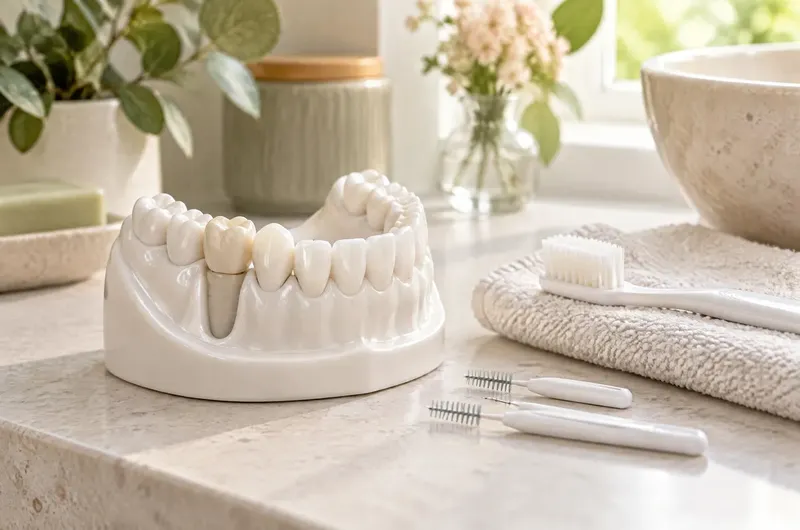
Our service page describes peri-implantitis as inflammation or infection in the gum and bone around a dental implant, similar to gum disease around a natural tooth. An implant itself does not decay, but the tissue around it can still become inflamed.
Healthdirect explains that a dental implant is a metal screw, usually titanium, that is attached to the bone in your jaw in place of a missing tooth’s root. It lists infection among the possible problems with dental implants, along with nerve damage, sinus problems and damage to surrounding teeth.
Is some bleeding normal straight after implant surgery?
Bleeding in the first days after surgery is a different situation from bleeding around an implant that has healed. Healthdirect says that after the procedure you might have some bruising, pain, swelling of your gums or face, and bleeding from your gums, and to ask your dental professional for advice if this happens.
It also says to follow the instructions you are given after your implant, which might include using mouthwash instead of a brush or floss for 2 to 3 weeks and eating soft foods while the site heals. If you are unsure whether what you notice is part of healing, call the clinic and ask.
What signs around an implant should I mention?
Our service page lists these as worth mentioning to the clinic:
- bleeding around the implant
- tenderness
- a change in how the implant feels
Healthdirect also advises that if you have swelling or inflammation of your gums or bone, you should have it checked and treated. Around natural teeth, Better Health Channel lists bleeding, red or swollen gums, bad breath, a bad taste in the mouth and tenderness when biting among the signs of gum disease, and advises seeing your oral health professional if you have swollen or bleeding gums.
How is peri-implantitis usually found?
Our service page explains that it is usually found at regular reviews and with imaging, often before you would notice it day to day. Each implant is checked separately, because one can be affected while others are fine, and an implant bridge is checked at every implant that supports it.
That is why keeping review appointments matters even when nothing feels wrong. If something does change between visits, call rather than waiting for the next review.
Why does it matter if it is left?
Better Health Channel explains that it is more difficult to clean around an implant than a natural tooth, and that gum disease around an implant can be very difficult to treat. If it is severe, the implant will need to be removed, and the area may no longer be suitable for future implants.
Our service page explains that the aim is to deal with it early, while it is still small. If peri-implantitis is found, treatment can include laser-assisted cleaning of the affected surface along with a review of your home care and bite, and our peri-implantitis laser page has more detail. The right approach is confirmed at a review appointment, and outcomes and timelines vary between individuals.
What can I do at home?
Healthdirect says that once your implant has healed, you should care for it like your other teeth:
- brush your teeth and gums twice a day
- clean between the implant and your other teeth using floss, interdental brushes or a water flosser
- have regular dental check-ups
Better Health Channel lists smoking and poorly managed diabetes as risk factors for gum disease, and healthdirect lists smoking, diabetes and gum disease among the things that may place you at a higher chance of infection or another complication with an implant. If you have a fixed arch or implant bridge, our service page notes that cleaning underneath is different from cleaning natural teeth, and we can show you how. Our dental implant aftercare guide covers daily habits in more detail.
How can the Bacchus Marsh team help?
If you notice bleeding, tenderness or a change around an implant, call us and mention which implant it is and when you first noticed it. If you need treatment for peri-implantitis, our service page says you will get the cost in writing before it starts, once the implant involved has been assessed. Our article on dental implant complications covers the wider picture.
Our clinic is at 83 Gisborne Road, Bacchus Marsh, and is open Monday to Saturday, 9 am to 5 pm. You can read about Dr Rachna Yadav, Principal Dentist, or contact the Bacchus Marsh team. To request an appointment, use our Bacchus Marsh booking page or call (03) 8001 7008.
This is general information, not advice about your own implant. Your dentist will examine the implant and the tissue around it and explain what suits you.
Sources
Sources checked 17 November 2026.
- Healthdirect: Dental implant procedure — what an implant is, recovery, complications, risk factors and caring for an implant; last reviewed February 2025.
- Better Health Channel: Gum disease — signs of gum disease, risk factors and when to see an oral health professional; reviewed 1 August 2025.
- Better Health Channel: Cosmetic dentistry and teeth whitening — cleaning around implants and gum disease around an implant; reviewed 12 December 2025.
- Magical Smiles Bacchus Marsh: Peri-implantitis care — what peri-implantitis is, signs to mention, reviews, treatment options and written costs.
- Magical Smiles: Dr Rachna Yadav and contact details — principal-dentist identity and clinic information.
Frequently asked questions
Yes. Our peri-implantitis care page explains that the implant itself does not decay, but the gum and bone around it can still become inflamed. Healthdirect lists infection among the possible problems with dental implants.
Our peri-implantitis care page says bleeding, tenderness or a change in how the implant feels is worth a call to the clinic rather than waiting for your next review. Healthdirect also advises having swelling or inflammation of your gums or bone checked and treated.
Healthdirect says that once your implant has healed, you should brush your teeth and gums twice a day, clean between the implant and your other teeth using floss, interdental brushes or a water flosser, and have regular dental check-ups.
About the author

Related articles
 Implants & ReplacementHow should I clean my dentures, and do they come out at night?
How should I clean my dentures, and do they come out at night?
How to clean dentures each day, why they come out at night, how to store them and when to see our Bacchus Marsh team about soreness or fit.
- Implants & ReplacementTypes of Dental Implants Compared
Types of Dental Implants Compared
Endosteal, subperiosteal, zygomatic and mini implants, and how to choose.
- Implants & ReplacementDental Implant Recovery, Week by Week
Dental Implant Recovery, Week by Week
What’s normal, what helps and when to call your dentist after implant surgery.
- Implants & ReplacementPreparing for Dental Implant Surgery
Preparing for Dental Implant Surgery
Consultation questions, sedation choices and a simple surgery-day checklist.
- Implants & ReplacementBone Grafting for Dental Implants
Bone Grafting for Dental Implants
Why a graft may be needed, the types, the procedure, recovery, risks and costs.
Our locations
Magical Smiles has locations in Caroline Springs, Bacchus Marsh and Point Cook.