
On this page
- Key points at a glance
- What are dental veneers, and what can they fix?
- Porcelain or composite: which veneer suits you?
- How much do veneers cost?
- How can you pay for veneers?
- How do you choose a dentist for veneers?
- How can veneers change how you feel about your smile?
- What’s the first step towards veneers?
- Ready to talk about veneers in Bacchus Marsh?
Smiling is one of the ways we connect with people, yet plenty of us feel self-conscious about our teeth. Veneers are a popular way to change how a smile looks while keeping healthy teeth underneath.
In short: dental veneers are thin, tooth-coloured shells bonded to the front of your teeth. They can improve the colour, shape, size or length of teeth, come in porcelain or composite resin, and suit many cosmetic concerns, though not every dental problem. This guide covers what they fix, how the two types compare, what they cost and how to choose a dentist.
Key points at a glance
- Veneers cover the front surface of teeth to improve how they look.
- Porcelain veneers can last 10 to 25 years with proper care; composite veneers usually last four to eight.
- Realistic expectations matter: veneers can greatly improve a smile, but they have limits and aren’t right for every dental issue.
- Cost varies with the type and number of veneers, and payment plans and health funds can help.
- Aftercare, like using a soft toothbrush and avoiding hard foods, helps veneers last.
What are dental veneers, and what can they fix?
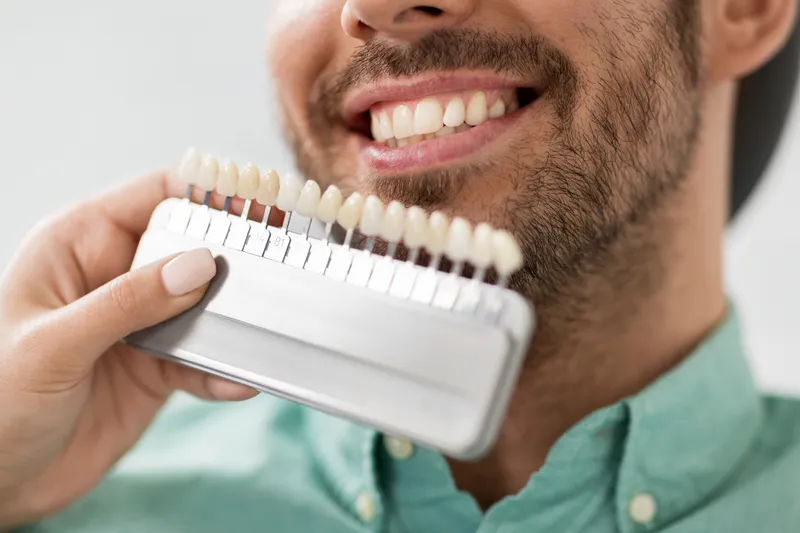
Dental veneers are thin, tooth-coloured shells that cover the front surface of your teeth. They’re made to blend in with your natural teeth and can improve the colour, shape, size or length of the teeth they cover.
Veneers can help with:
- crooked or uneven teeth
- discoloured teeth
- chipped, broken or worn teeth
- misshapen teeth
- gaps between teeth
In some cases, veneers can reduce the need for more extensive dental work. Your dentist will tell you whether they suit your teeth or whether another treatment would work better.
healthdirect (last reviewed February 2025) adds that veneers don’t straighten your teeth or fix your bite, and that they may not be suitable if you grind or clench your teeth or have gum disease.
Porcelain or composite: which veneer suits you?
The two main types are porcelain and composite resin. Porcelain looks more natural and lasts longer; composite costs less and can often be done in one visit. Here’s how they compare.
| Aspect | Porcelain veneers | Composite resin veneers |
|---|---|---|
| Appearance | Highly natural; mimics the translucency of real teeth. | Slightly less natural than porcelain. |
| Lifespan | 10 to 25 years with proper care. | Four to eight years; more prone to chipping and staining. |
| Cost | Higher upfront, with a longer lifespan. | More affordable in the short term. |
| Visits | At least two. | Often completed in one. |
| Maintenance | Low maintenance and stain resistant. | May need more maintenance and regular polishing. |
| Repairs | Difficult to repair; often replaced instead. | Easily repaired in the dental chair. |
The right type depends on your teeth, your lifestyle and your budget, and your dentist can help you decide. If you’re short on time, our article on one-visit composite veneers explains how that option works, and you can read more about porcelain veneers on our service page. For the steps from consultation to bonding, see how veneers can change your smile.
How much do veneers cost?
As at September 2026, our budget calculator uses indicative figures of $1,700 per porcelain veneer and $695 per composite veneer. Your total depends on the type of veneer, how many you need and the details of your case, and your dentist confirms the cost after assessing your teeth. The same September 2026 figures list composite bonding from $250 per tooth and Snap-On Smile, a removable option, from $2,000 per arch, which your dentist may raise as alternatives. healthdirect (last reviewed February 2025) notes that porcelain veneers are generally more expensive than resin veneers, and that cost also depends on how many veneers you get and how big they are.
It can seem a significant investment, so it’s worth understanding where the money goes before you decide. Talking it through with your dentist helps you see the full picture and how veneers could fit your budget. If you’re also weighing up crowns, our crowns vs veneers guide compares the two.
How can you pay for veneers?
You don’t have to pay for veneers in one go. Payment plans, financing and your health fund can all make the cost more manageable.
- Payment plans: spread the cost of your veneers into smaller payments over time. Afterpay splits fees into four equal instalments, and humm publishes plan terms of between 3 and 120 months for amounts up to $50,000, depending on the plan you choose.
- Other financing: Zip lets you spread dental costs into manageable repayments; interest and fees may apply depending on your account type.
- Health funds: depending on your cover, part of the cost may be paid by your fund. Check with your provider what cosmetic dental benefits you have. We accept most health funds, and our HICAPS terminal lets you claim on the spot.
Knowing your options makes it easier to move forward with confidence. Our payment options page has the details.
How do you choose a dentist for veneers?
Look for experience with veneers, a consultation that takes time to understand what you want, and clear answers about materials. A few things to check:
- Qualifications and experience: look for a dentist with training and experience in cosmetic dentistry, particularly veneers. Every registered dentist in Australia is listed on the AHPRA public register, and all Magical Smiles Bacchus Marsh dentists are AHPRA-registered and committed to ongoing education.
- The consultation: choose a dentist who takes time to understand your needs and explains your treatment options clearly.
- Materials: ask what your veneers will be made from. Good-quality materials help give a natural, long-lasting result.
- The clinic: it should be clean, equipped with modern technology and staffed by friendly, professional people.
A dentist who has the technical skill and understands what you want for your smile makes treatment planning easier. You can meet our dentists before you book.
How can veneers change how you feel about your smile?
For many people, the biggest change is confidence. Veneers are tailored to your face and your goals, and a smile you’re happy to show can make everyday interactions feel easier.
- Self-esteem: a brighter, more even smile can help you feel more confident, socially and at work.
- First impressions: a smile is often one of the first things people notice.
- New opportunities: with more confidence, you might feel more open to social and professional opportunities.
- Motivation for oral health: many people find that investing in veneers motivates them to keep up a better oral health routine.
- A plan made for you: veneers are tailored to suit your facial structure and your goals.
What’s the first step towards veneers?
Book a veneer consultation with a dentist experienced in cosmetic dentistry. It’s your chance to talk through your goals, find out whether veneers suit your teeth and get a clear idea of the costs.
Come with questions, and with realistic expectations: veneers can make a real difference, but they have limits, and your dentist can explain what they can and can’t do for your teeth. Once they’re in, caring for them well helps them last, and our veneer care and maintenance guide covers the everyday habits.
Ready to talk about veneers in Bacchus Marsh?
Veneers can do more than change how your teeth look. With the right planning and care from your dental team, they can help you feel more confident about your smile.
The Magical Smiles team at 83 Gisborne Road, Bacchus Marsh, can guide you through your options with personalised care. We’re open Monday to Saturday, 9 am to 5 pm. Call (03) 8001 7008 or book your consultation online.
Frequently asked questions
Veneers can improve the look of crooked, discoloured, chipped, broken, uneven or misshapen teeth, and gaps between teeth. They can change the colour, shape, size or length of teeth, but they aren’t suitable for every dental problem.
With proper care, porcelain veneers can last 10 to 25 years. Composite resin veneers usually last four to eight years and are more prone to chipping and staining.
Our budget calculator uses indicative figures of $1,700 per porcelain veneer and $695 per composite veneer. Your total depends on the type of veneer, how many teeth are treated and your dental needs, and your dentist confirms it after an assessment.
It depends on your level of cover. A portion of the cost may be paid by your fund, so check with your provider what cosmetic dental benefits you have. We accept most health funds and you can claim on the spot with HICAPS.
Brush with a soft toothbrush, floss daily, avoid biting hard foods and keep up regular dental check-ups. Good aftercare helps your veneers last and keeps your mouth healthy.
About the author

Our locations
Magical Smiles has locations in Caroline Springs, Bacchus Marsh and Point Cook.